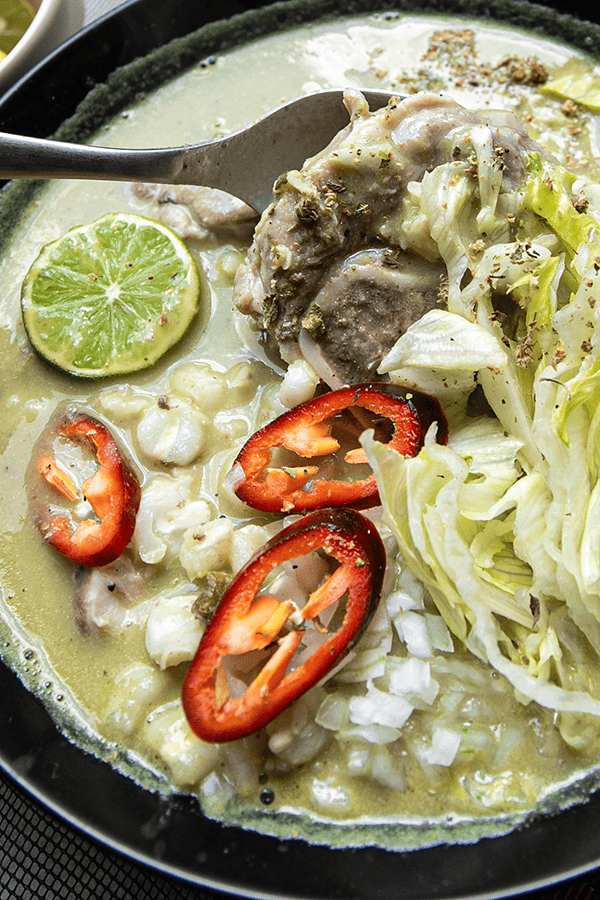
Green pozole is Mexico’s cozy, emerald-green bowl of comfort — tender pork simmered with tomatillos, poblano, epazote, and pepitas, then served with a spread of garnishes that make every bite your own. It is beloved in the southern states of Guerrero and Oaxaca, but once you make it at home you will understand why every region in Mexico has claimed it as their own.
This post may contain affiliate links. If you purchase through these links, I may earn a small commission at no extra cost to you. Thank you for supporting Love & Harvest!

What Is Pozole?
Pozole is a traditional Mexican soup made with hominy (dried maize treated with lime), meat (usually pork), and a deeply seasoned broth. It is a celebration dish — found at birthdays, national holidays, and family gatherings — and in many Mexican cities you will find dedicated pozolerias that serve nothing else. Three varieties exist: red (rojo), green (verde), and white (blanco), each tied to a different region and flavor profile.

Red vs. Green vs. White Pozole
Red Pozole (Pozole Rojo)
- Region: Central and western Mexico — Jalisco, Guanajuato, Michoacán. Guadalajara is famous for its red pozole.
- Flavor: Deep, earthy, slightly spicy. Built on dried guajillo and ancho chiles.
Green Pozole (Pozole Verde)
- Region: Southern Mexico — Guerrero and Oaxaca, with strong presence in central Mexico.
- Flavor: Fresh, tangy, herbaceous. Tomatillos and green chiles give the broth its color and acidity.
White Pozole (Pozole Blanco)
- Region: Northern and central Mexico — Sonora, Sinaloa.
- Flavor: Neutral, mild broth. The garnishes do the heavy lifting.

History of Pozole
Pozole is deeply rooted in pre-Columbian Mesoamerica, where hominy held sacred significance. It was used in religious ceremonies, and historical accounts describe it as a ritual dish during certain sacrificial rites. When the Spanish conquistadors arrived in the 16th century, they introduced pork, beef, and European spices, transforming pozole into the dish we recognize today — a fusion of indigenous and colonial culinary traditions. Today it is one of Mexico’s most beloved and iconic dishes, celebrated in homes and restaurants from Tijuana to Oaxaca.
Ingredients for Green Pozole
Ingredients
Tomatillos
- Why they matter: Tomatillos are what turn the broth green and give it its signature tang. My mother-in-law insists on smaller tomatillos — they are more acidic and aromatic than large ones. Canned tomatillos (B07B17ZDQZ) work in a pinch, but fresh are far superior for this dish.
Hominy
- Why it matters: Hominy is the soul of pozole. These are dried maize kernels treated with lime water (nixtamalization), which transforms them into large, chewy, spongy pieces that absorb the green broth beautifully. Do not substitute regular corn — the texture will not be the same. Use dried hominy (B0008J3I9U) for the best result, or drained canned hominy if short on time.
Poblano Peppers
- Why they matter: Charring the poblano directly on a flame is essential — it adds a smoky depth and softens the pepper so it blends smoothly into the sauce. When dried, poblanos are called ancho chiles (B00TQVHXNO) — worth keeping in your pantry for red pozole or mole.
Epazote
- Why it matters: Epazote is an aromatic Mexican herb with a bold, slightly resinous flavor — described as a mix of mint, citrus, and earthiness. It is a staple in southern Mexican cooking and completely transforms the broth. If you cannot find it fresh, dried works but use less (it intensifies when dried).
Mexican Oregano
- Why it matters: Mexican oregano (B07D62QY2F) is botanically different from Mediterranean oregano — it has a more citrusy, robust profile that holds up to the rich green broth. Do not substitute Mediterranean oregano if you can avoid it.

Professional Tips
1. Pressure-Cook the Meat First
Pork knuckle and other tough cuts contain collagen and connective tissue that require prolonged cooking to become tender. Pressure cooking converts tough fibers into gelatin in 40 minutes instead of 3+ hours on the stovetop. It also infuses the meat with the aromatics in the pot (bay leaf, garlic, onion) and keeps it moist. We love our Instant Pot Duo 7-in-1 for this — it also makes rice, stews, and slow-cooked dishes.
2. Pan-Char All the Salsa Ingredients
Do not blend raw tomatillos, onion, and garlic into the sauce. Charring in a dry hot skillet caramelizes the natural sugars, removes excess moisture, and adds a smoky complexity that distinguishes a restaurant-quality pozole from a flat one. The Maillard reaction at work — same principle as searing meat. See also our Instant Pot Mexican menudo for another recipe that uses this charring technique.
3. Garnish Generously
The garnishes are not optional — they complete the dish. Standard pozole verde accompaniments: thinly sliced radish, shredded lettuce or cabbage, diced white onion, sliced serrano, avocado, lime wedges, tostadas with sour cream, and a sprinkle of Mexican oregano. For crunch, add chicharron (pork cracklings).

Frequently Asked Questions
Can I use chicken instead of pork for green pozole?
Yes — chicken thighs are the most common substitute. Skip the pressure cooker and simmer bone-in thighs directly in the green sauce for 30–40 minutes until tender. The result is lighter but equally delicious.
Where do I find hominy?
Most Latin grocery stores carry both canned and dried hominy. In the US, you can order dried hominy (B0008J3I9U) on Amazon. If using dried, soak overnight and simmer for 2–3 hours before adding to the pozole.
How thick should the green sauce be?
After blending, the sauce should be thick enough to coat a spoon but still pourable. If it is too thick after cooking, add reserved pork cooking water — I recommend starting with 2 cups and adjusting. The final pozole should be a rich, coating broth rather than a thin soup.
Can I make green pozole ahead of time?
Absolutely. In fact it tastes better the next day as the flavors deepen. Store broth and meat separately in the refrigerator for up to 4 days. The garnishes must always be prepared fresh.
What is the difference between pozole verde and menudo?
Both are Mexican hominy soups, but menudo uses beef tripe rather than pork and has a completely different flavor profile. See our Instant Pot Mexican menudo if you want to explore both.

Green Pozole “Pozole Verde”
A hearty stew, a celebration of hominy, tender chunks of pork, and fresh green herbs – that's green pozole. It's a rich, lush creation, teeming with the earthy essence of tomatillos, cilantro, and jalapeños, all meticulously pureed into a velvety, emerald-green elixir that clings to your spoon like a cherished secret.
Print Recipe
Pin Recipe
Prep Time:20 minutes
Cook Time:30 minutes
Pressure Cook:40 minutes
Course: Soup
Cuisine: Mexican
Keyword: green pozole, northern pozole, pozole verde
Equipment
- pressure cooker
- blender
Ingredients
Pressure Cook Meat
- 1½ kg pork knuckle, 1 inch sliced, frozen or fresh
- 2 cloves
- 3 bay leaves
- ½ white onion, sliced in half
- 3 garlic cloves
- 2 quarts water (or 8 cups)
Pozole Soup
- 1 poblano pepper
- 1 kg tomatillos, sliced ½ inch
- 4 tbsp pumpkin seeds (pepitas)
- 2–3 serrano peppers, deseeded and cut in half
- 1 white onion, sliced in half
- 2 garlic cloves
- 1 cup epazote
- 1 tsp dried Mexican oregano
- 2 allspice (pimento gorda), crushed, or 1 tsp ground allspice
- sea salt to taste
- 3 cups hominy, drained
Instructions
Pressure Cook Pork
- Take the pork knuckles and place them in a large bowl. Rinse several times in cold water, then soak in cold water with 2 tsp of salt for 15–30 minutes.
- Rinse the pork in cold water again and place in your pressure cooker with the remaining ingredients. Pressure cook on high for 40 minutes.
- Once done, release the valve. Open the lid when safe, remove the spices, and reserve both the meat and the cooking liquid.
Green Pozole
- Gas stove: In a large frying pan, heat 2 tsp of oil over medium-high. Add tomatillos, pumpkin seeds, serrano, onion, and garlic. Char each ingredient until browned (pumpkin seeds toast first — watch carefully). Add more oil as needed to brown the tomatillos. On a separate burner, char the poblano pepper directly on the flame, turning with tongs until all sides are completely blackened. Set aside to cool, then peel off the skin and remove seeds.
- Electric stove: In a large frying pan, heat 2 tsp of oil over high. Add all ingredients including the poblano pepper. Char each until browned, pumpkin seeds first. For the poblano, keep flipping with tongs until completely charred on all sides. Set aside, peel, and deseed.
- Once everything is charred, add all ingredients to a blender with epazote, oregano, and allspice. Blend on high until smooth.
- Heat a large pot with 2 tbsp of oil over medium-high. Add the green sauce and cook for 10 minutes. Add the pork and hominy, then cook for 30 minutes. Add reserved pork cooking water (2–4 cups) to reach your preferred consistency. Salt to taste.
- Serve with radish, shredded lettuce, diced onion, serrano slices, avocado, lime wedges, tostadas with sour cream, oregano, and chicharron on the side.
Leave a Reply