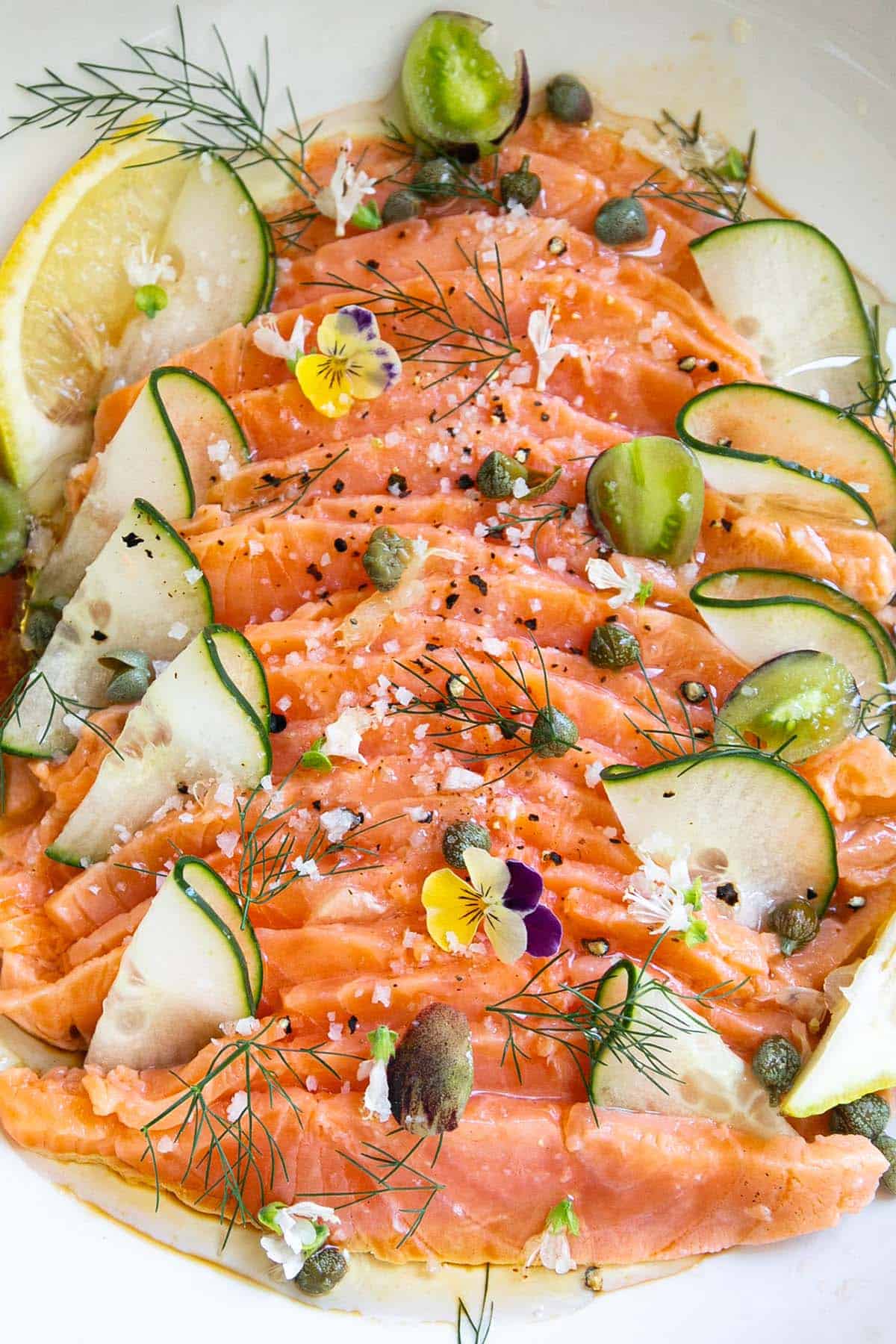
Making sashimi at home is one of the most rewarding things you can do in the kitchen — and it is far more achievable than most people think. This guide walks you through how to safely source, freeze, and slice salmon so you can enjoy restaurant-quality sashimi without leaving your house.
This post may contain affiliate links. If you purchase through these links, I may earn a small commission at no extra cost to you. Thank you for supporting Love & Harvest!

How I Started Making Sashimi at Home
Allow me to share a little secret: crafting homemade sashimi has been quite the adventure for me. Living in Mexico, where authentic sashimi experiences are scarce and restaurants often overcharge for mediocre quality, I seized the opportunity and started experimenting. What followed was years of research, countless batches of salmon, and a method I use every time.
In this guide I will share exactly how I safely freeze salmon fillets to achieve sashimi-grade quality, the shortcut I discovered for sourcing great fish, my personal experience using Costco salmon, and a simple plating recipe to pull it all together.
This post shares how I prepare salmon at home. Raw fish always carries some risk; follow the freezing guideline below, and skip raw fish if you are pregnant, immunocompromised, very young or elderly.

What Fish Should I Use?
Contrary to popular belief, you do not need to break the bank to source sashimi-grade fish. With the right knowledge and a keen eye, you can find excellent options at your local fish market or even in the frozen section of your grocery store. Check the labeling and ensure the fish has been frozen at the appropriate temperature to kill any potential parasites.

Wild Salmon vs. Farmed Salmon for Sashimi
The choice between wild-caught and farmed salmon depends on your personal preferences and priorities. Both can work beautifully for sashimi when handled correctly.
- Flavor Preference: Wild-caught salmon tends to have a richer, more intense flavor. Farmed salmon is milder and consistently fatty — often preferred for sashimi.
- Nutritional Considerations: Wild salmon generally contains higher omega-3 levels. Both are excellent, nutritious options.
- Sustainability: Some prefer wild-caught for environmental reasons, though responsible farmed options exist.
- Availability and Price: Farmed salmon is more readily available year-round and typically more affordable.

How to Safely Freeze Salmon for Sashimi
To eliminate potential parasites in fresh salmon, the FDA recommends freezing at -4°F (-20°C) or below for at least 7 days. This is the step I never skip.
Step-by-Step Freezing Guide
-
Select Fresh Salmon: Begin with high-quality, fresh salmon fillets. Start with fish that is fresh and shows no signs of spoilage.
-
Inspect and Clean: Check for discoloration or odor. Pat dry with paper towels.
-
Portion the Salmon: Cut into even portions for uniform freezing.
-
Wrap Tightly: Wrap each portion in plastic wrap or seal in airtight freezer bags, removing as much air as possible.
-
Label and Date: Mark each portion with the date and fish type.
-
Freeze Cold Enough, Long Enough: The FDA standard is -4°F (-20°C) or colder for at least 7 days. Many home freezers sit around 0°F (-18°C), which is not cold enough, so set yours to its coldest setting and leave space between portions for airflow.
-
Check the Temperature: Use a freezer thermometer to confirm it holds -4°F (-20°C) or colder for the full 7 days.
-
Thaw Safely: Thaw overnight in the refrigerator, or in a sealed bag under cold running water. Never at room temperature.
Freezing kills parasites, not bacteria. Pregnant people, young children, older adults and anyone with a weakened immune system should skip raw fish.

Other Ways to Source Sashimi-Grade Salmon
From frozen specialty stores: In Mexico I discovered WildFork, a store that sources fresh seafood and freezes it immediately at extremely low temperatures. Ask the store whether it was frozen to the FDA parasite standard; if they can’t confirm, freeze it yourself as above.
From fresh fish stores: Check the store’s description for high-quality, fresh salmon sourcing. Inspect fillets carefully — no discoloration, no odor, firm to the touch. To prepare our sashimi we also use a sashimi knife set for clean, precise slicing.

I Have Used Costco Salmon for Sashimi
I anticipate mixed opinions on this, but I have personally used Costco salmon to make sashimi — many times. Despite what social media says, Costco salmon has worked well for me, always after freezing it myself as described above.
What About the Cautionary Labels at Costco?
Take those labels seriously: Costco does not sell this salmon as sashimi-grade, so if you want to eat it raw, freeze it first as shown above. Always check the packaging date on the day of purchase, look for firmness, and verify there are no signs of water leakage, discoloration, or odor.
While I acknowledge inherent risks, I have prepared gravlax and sashimi from Costco salmon many times, always freezing it first. For presentation, I serve on a bamboo sushi mat with soy sauce and wasabi paste.
How to Make Sashimi
Once your salmon is properly thawed, making sashimi is all about technique and a sharp knife.
- Thaw the Salmon: Remove from the freezer and thaw in the refrigerator overnight, or in a sealed bag under cold running water for faster results. Fully thaw before slicing.
- Prepare the Salmon: Pat fillets dry with paper towels to remove excess moisture. Dry fish slices cleanly and looks better on the plate.
- Slice the Salmon: Using a sharp knife, slice thinly and evenly against the grain — approximately 1/4 to 1/2 inch thick. Take your time for uniform, beautiful slices.
- Serve and Garnish: Arrange on a platter with thinly sliced cucumber, pickled ginger, and wasabi. Sesame seeds or microgreens add a nice touch.
- Serve Immediately: Sashimi is best fresh. Serve right after slicing. A bed of ice helps keep it chilled during presentation.
- Enjoy Responsibly: Handle raw fish with care. Proper hygiene throughout the process is non-negotiable.
Ingredients
Salmon Fillet
The star of the dish. Choose a fresh, high-quality salmon — wild or farmed — that has been properly frozen to sashimi-grade standards.
- Why it matters: The quality of your salmon determines everything. Do not compromise on freshness.
Soy Sauce
A classic dipping sauce for sashimi. Look for a good-quality Japanese soy sauce — it should have a clean, rounded umami flavor rather than just saltiness.
- Why it matters: A quality soy sauce enhances the delicate salmon flavor without overpowering it.
Wasabi Paste
Traditional accompaniment. Use real wasabi paste rather than horseradish-based imitations when possible.
- Why it matters: Wasabi does more than add heat — it provides a sharp, clean flavor contrast that elevates the entire experience.
Pickled Ginger
Served between pieces to cleanse the palate. The acidity refreshes your taste buds between bites so each slice of salmon tastes as good as the first.
- Why it matters: It is not just garnish — it is a functional part of the sashimi ritual.
Frequently Asked Questions
Is it safe to eat store-bought frozen salmon as sashimi?
If the salmon has been frozen at -4°F (-20°C) or below for at least 7 days, it meets the FDA parasite guideline; freezing does not remove bacteria. Always verify the source and freezing practices of your specific store.
Can I use tuna or other fish for sashimi?
Yes — tuna (bluefin, yellowfin, bigeye), yellowtail, halibut, and sea bass are all popular choices. The same freezing and freshness standards apply regardless of the fish species.
What is the difference between sashimi and sushi?
Sashimi is simply raw fish served on its own, typically with soy sauce, wasabi, and ginger. Sushi refers to vinegared rice combined with other ingredients — it may or may not include raw fish.
How thin should I slice sashimi?
For salmon, aim for slices between 1/4 and 1/2 inch (6–12 mm) thick, cut against the grain. Thinner slices work better for leaner fish. A sharp knife and a steady hand make all the difference.
Does Costco salmon require additional freezing before eating raw?
Yes. Costco’s fresh Atlantic salmon is not sold as sashimi-grade, so freeze it at -4°F (-20°C) or colder for 7 days before eating it raw. I do this every time.
Can I make sashimi without a special knife?
Any sharp, long-bladed knife can work in a pinch, but a dedicated sashimi knife produces far cleaner cuts. A clean cut protects the fish’s delicate muscle fibers and results in better texture.
If you love Japanese-inspired recipes, also check out our homemade sushi roe guide and our Cha Gio fried spring rolls for more fresh, vibrant dishes from the kitchen.
Homemade Sashimi
Ingredients
Method
- Thaw the frozen salmon overnight in the refrigerator. Never thaw at room temperature.
- Pat the thawed salmon fillet dry with paper towels to remove excess moisture — dry fish slices cleanly and looks better on the plate.
- Using a sharp knife, slice the salmon thinly and evenly against the grain — approximately 1/4 to 1/2 inch (6–12 mm) thick. Take your time for uniform, beautiful slices.
- Arrange slices on a serving platter with thinly sliced cucumber. Add pickled ginger on the side.
- Serve immediately with soy sauce and wasabi for dipping. A bed of ice helps keep the sashimi chilled during presentation.