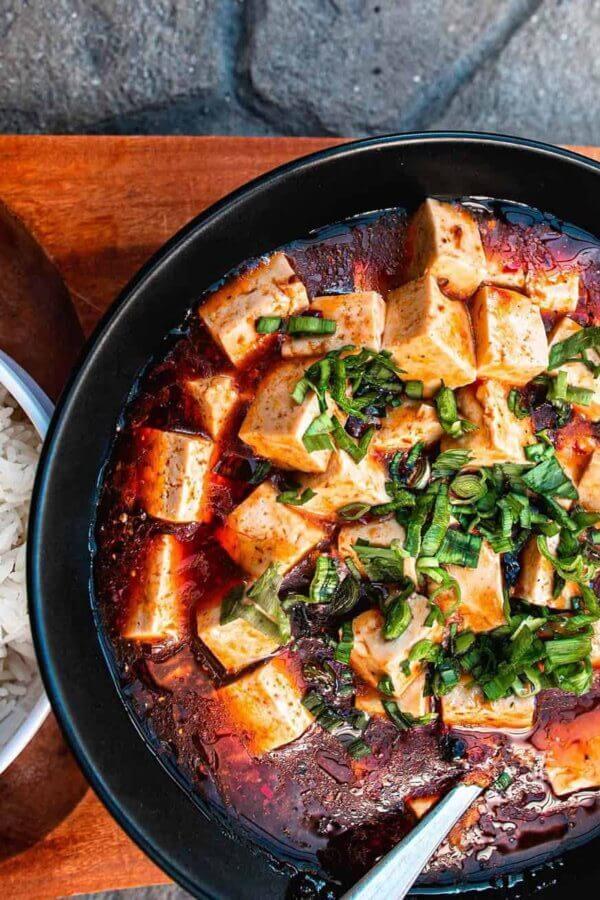
Mapo tofu is the smell of home. One whiff of doubanjiang frying in hot oil with garlic and black beans and I am instantly transported back to a small cafeteria in Vancouver, eating a hot bowl of spicy tofu over steamed rice while wearing a white and orange ski jacket, completely broke, and completely happy. This is that recipe — the one my mom confirmed, the one a Chinese fast-food chef taught me, and the one that still makes bad days feel better.
This post may contain affiliate links. If you purchase through these links, I may earn a small commission at no extra cost to you. Thank you for supporting Love & Harvest!
Vegetarian Mapo Tofu
This recipe is super versatile. It is already vegetarian as written. For a gluten-free version, use tamari instead of soy sauce, and a doubanjiang, cooking wine and black vinegar labelled gluten-free. You can make it soupier or starchier by adjusting the slurry, and you can dial the spice level up or down by using more or less doubanjiang and chili oil.
This pairs beautifully with our Steam Preserved Vegetables with Pork or our Traditional Hong Kong Curry Chicken for a full Cantonese-style dinner spread.
Why You Will Love This Mapo Tofu Recipe
- Simple with easy instructions — there is a reason mapo tofu appears on every Chinese fast-food menu. It is fast, it is easy, and the results are authentic with only a few key sauces.
- Reheat-friendly — the flavour is still exceptional after a day in the fridge. It reheats perfectly in the microwave — ideal for days when you need to be out the door quickly.
- Authentic Cantonese home cooking — if you are looking for genuine Cantonese home-style cooking, mapo tofu is one of the most iconic and comforting recipes in that tradition.
Ingredients
Doubanjiang (Chili Bean Paste)
- Why it is non-negotiable: Doubanjiang is the soul of this dish. It is a fermented paste made from broad beans, chili, and salt — deeply savoury, spicy, and complex. No other ingredient replicates its umami depth. There are spicy and non-spicy varieties; spicy is traditional. The Juan Cheng brand in the red plastic jar is the gold standard for home cooks.
Dried Fermented Black Beans
- Why they matter: These small preserved beans add a deeply savoury, earthy, slightly funky flavour that amplifies the doubanjiang without competing with it. They dissolve partially into the sauce and create an irreplaceable base note. Do not skip them or substitute with regular black beans — the fermented flavour is essential.
Szechuan Peppercorns (optional)
- Why they create the authentic numbing heat: The legendary “ma la” (numbing-spicy) profile of Mapo Tofu comes from Szechuan peppercorns. They create a unique tingling, almost electric sensation on the tongue that is completely different from regular chili heat. Grind them fresh and sprinkle on top just before serving.
Silken or Soft Tofu
- Why texture matters here: Silken or soft tofu has a creamy, delicate texture that absorbs the sauce beautifully. Medium-firm tofu is the maximum firmness to use — anything firmer will not have the characteristic melt-in-your-mouth quality. Cut into 3/4-inch cubes and handle gently throughout cooking.
Pro Tips
Do Not Over-Stir
Over-stirring will break the tofu and turn a beautiful cubed tofu stew into a murky mash. Use a slotted spoon and do slow, gentle circular stirs. Never use a fork or anything sharp.
The Slurry Is Your Friend
The cornstarch slurry (1 tsp cornstarch dissolved in 1/2 cup room-temperature water) thickens the sauce and coats every cube of tofu. Add it after the tofu and stir gently only once or twice — the sauce will tighten beautifully as it simmers.
Also note: step 3 in the instructions should read “In a hot wok or pan” — “I’m a hot wok” in the original is a typo.
Frequently Asked Questions
Is this recipe actually Cantonese or Sichuan?
Mapo Tofu originates from Sichuan province and is traditionally made with ground pork and Sichuan peppercorns. This version is a Cantonese adaptation — the way it has been cooked in Hong Kong-style homes and restaurants for generations. It is vegetarian, slightly less numbing, and uses a thicker sauce. Both are delicious and authentic within their respective traditions.
Can I add ground pork to this recipe?
Yes. Brown 100–150g of ground pork in the wok before adding the doubanjiang and black beans. The pork adds richness and protein and is how the traditional Sichuan version is made. Cook the pork until no longer pink, then proceed with the sauce as written.
Why is my sauce not thickening?
The slurry needs to reach boiling temperature to activate the cornstarch. Make sure the heat is turned up high enough for the pan to bubble after you add the slurry. If the sauce is still thin after 2 minutes of gentle simmering, mix another 1/2 tsp cornstarch with a tablespoon of cold water and add it to the pan.
Can I make mapo tofu ahead of time?
Yes. The sauce can be made up to 2 days ahead and stored in the refrigerator. Add freshly cut tofu when you reheat, as previously cooked tofu tends to become spongy. Reheat over medium-low heat and stir very gently.
What is a good substitute for Chinese cooking wine?
Dry sherry is the closest substitute and works very well. Mirin (Japanese rice wine) can also work but is sweeter — use a little less. If you want a non-alcoholic option, replace with chicken broth or vegetable stock plus a few drops of rice vinegar for acidity.
How do I know when the tofu is heated through?
When the sauce begins to bubble gently around the edges of the tofu, the tofu is heated through. At this point, turn the heat to low, cover with a lid, and cook for 10 minutes. The tofu will absorb the sauce and the flavours will deepen significantly.

Authentic Mapo Tofu: The Way My Mom Made It
Ingredients
Method
- Prepare your tofu by slicing them into small cubes – 3/4-inch cubes. Set aside.
- Prepare your slurry by mixing all the ingredients together. Set aside.
- I’m a hot wok or pan, add oil. Fry the doubanjiang, black beans, garlic and ginger together until fragrant – 3 minutes.
- Slowly add the chili oil, soy sauce, honest wine, black vinegar and sugar. Let it cook for another 5 minutes.
- Turn the heat to medium low and carefully add the tofu. Stir in the slurry and slowly with a spoon and try not to break the tofu.
- When the pan starts to bubble, turn the heat to low and put a lid on it and cook for 10 minutes.
- Serve with scallion on top and drizzle sesame oil on top. Serve with warm steamed rice.
Leave a Reply