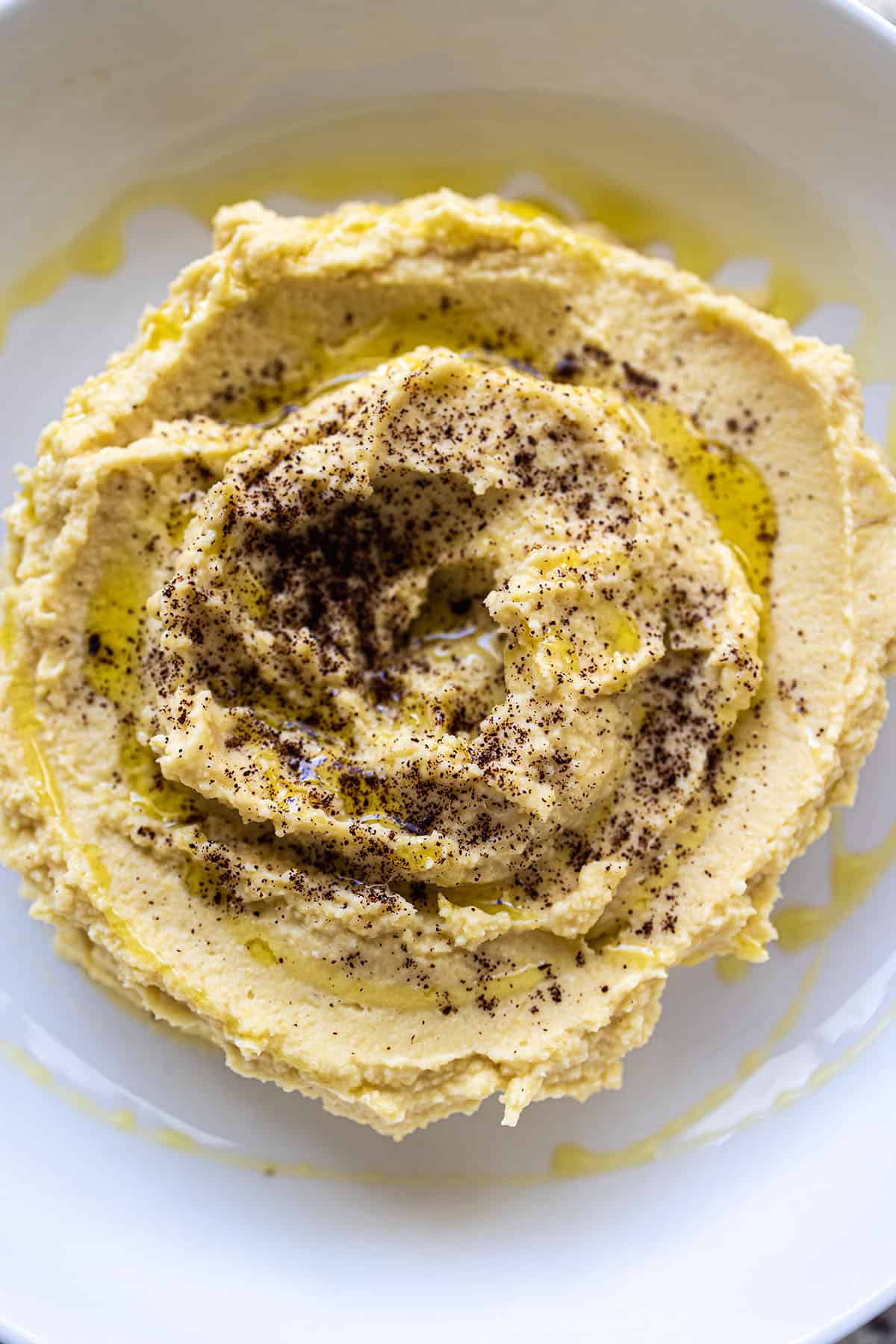
Creamy, flavourful, and ready in 10 minutes — this homemade hummus beats anything from the grocery store. Made with chickpeas, tahini, lemon, garlic, and finished with a drizzle of olive oil and a sprinkle of sumac.
This post may contain affiliate links. If you purchase through these links, I may earn a small commission at no extra cost to you. Thank you for supporting Love & Harvest!

Why You Should Try This Recipe
Hummus is a versatile, satisfying snack that’s perfect for dipping veggies, spreading on sandwiches, or serving alongside your favourite meals. Making it at home not only saves money but also lets you control the flavour and texture. Whether you soak chickpeas overnight for fresh-from-scratch flavour or use canned chickpeas for convenience, this recipe will become your go-to dip in no time.

Why Garnish the Hummus with Sumac?
Sprinkling sumac on top of hummus adds a burst of tangy, citrus-like flavour that complements the creamy richness beautifully. It enhances the visual appeal with its deep red colour and provides a bright, zesty finish that balances the dish. Sumac is also a traditional Middle Eastern spice, giving your hummus an authentic touch.
Ingredients
Chickpeas
- The heart of the recipe — they provide the creamy, starchy base and nutty flavour. For the smoothest hummus, use canned chickpeas (rinsed well) or cook dried chickpeas from scratch. If using canned, reserve the aquafaba (chickpea water) to thin the hummus to your preferred consistency. Find quality tahini paste while you’re at it — it’s equally essential.
Tahini
- Ground sesame seed paste — the ingredient that separates great hummus from good hummus. Use a runny, well-stirred tahini made from hulled sesame seeds. It adds richness, nuttiness, and binds everything into a silky paste. Don’t substitute with peanut butter — the flavour profile is completely different.
Fresh Lemon Juice
- Always fresh, never bottled. Lemon juice provides the bright acidity that lifts all the other flavours and prevents the hummus from tasting flat or heavy. Start with half a lemon and adjust — the right amount makes the whole dip come alive.
Extra Virgin Olive Oil
- Drizzled on top and blended in for silkiness. Use a good quality extra virgin olive oil — its fruity, peppery finish is a key part of the final flavour. Don’t use light or regular olive oil; the flavour difference matters here.
Garlic
- Raw garlic adds a sharp, savoury kick that’s traditional in hummus. For a milder result, roast a whole head of garlic in the oven first — roasted garlic gives a sweet, mellow depth without any bite. Start with one clove raw; you can always add more to taste.
Sumac
- A dried, ground berry from the Middle East with a tart, citrus flavour. It’s the classic finishing spice for hummus — adds colour and a pop of brightness that elevates the whole presentation. Find it in Middle Eastern grocery stores or here on Amazon.

Our Favourite Side Dishes
We love pairing this hummus with fresh veggies like carrots, cucumbers, and bell pepper slices. Pita bread or crackers are also fantastic options. For a heartier snack, try it with grilled chicken or falafel. For homemade bread to serve alongside, our Fluffy Naan Bread is perfect — warm and soft, ideal for scooping.
Love Mediterranean flavours? Try our Chicken Shawarma Wrap with Caesar Salad where this hummus makes an excellent spread, or our Best Garlic Mashed Potatoes for another crowd-pleasing dip alternative at the table.
A good food processor is the most important tool for smooth hummus — blend for at least 3 minutes for a truly silky texture.
How to Make It Easier and Faster
- Soak the Chickpeas: If making from scratch, soak dried chickpeas overnight and cook them until soft. More time-intensive but yields the creamiest texture.
- Use Canned Chickpeas: For a quicker option, grab a can of chickpeas. Just rinse them well before blending.
- Peel the Chickpeas (Optional): For extra-smooth hummus, peel the skins off the chickpeas. While not necessary, it’s worth it if you want a velvety texture.
Making hummus at home is an easy way to elevate any meal or snack. Whether you’re prepping for a family gathering, a quick lunch, or a cozy night in, this recipe will always deliver. Give it a try — you won’t regret it!
Sammi Chow — Love and Harvest
Frequently Asked Questions
Can I use dried chickpeas instead of canned?
Yes, and the results are even creamier. Soak 1 cup of dried chickpeas overnight in plenty of cold water. Drain, then simmer for 1–2 hours until very soft (they should crush easily between your fingers). Cool before blending. Dried chickpeas make about 2.5 cups cooked — the equivalent of one large can.
Why is my hummus grainy and not smooth?
Two reasons: not blending long enough, and not using enough tahini or liquid. Blend for a minimum of 3 minutes, scraping down the sides. Add aquafaba (chickpea water), ice water, or more lemon juice one tablespoon at a time until you reach the silky consistency you want. Warm chickpeas also blend smoother than cold ones.
How long does homemade hummus keep?
Store in an airtight container in the refrigerator for up to 5 days. Drizzle a thin layer of olive oil on top before sealing to keep it fresh and prevent it from drying out. Give it a stir before serving as it may thicken slightly in the fridge.
Can I freeze hummus?
Yes. Freeze in individual portions in airtight containers for up to 3 months. Thaw overnight in the refrigerator and stir well before serving. The texture may be slightly different after freezing — add a drizzle of olive oil and a squeeze of lemon to refresh it.
What is sumac and can I substitute it?
Sumac is a dried ground berry with a tangy, citrus-like flavour. If you can’t find it, a small pinch of lemon zest on top provides a similar brightness. Smoked paprika is another common topping that adds colour and a warm, smoky note instead of the citrus tang.
What’s in hummus?
It’s mostly chickpeas and tahini, blended with fresh lemon juice, extra virgin olive oil, garlic, salt and a splash of aquafaba, with a pinch of sumac on top.
Leave a Reply