Category: appetizers recipes

  • Green Nopales Corn Tortillas

    Green Nopales Corn Tortillas

    If you have ever wanted to make authentic Mexican tortillas at home, this green tortilla recipe with nopales is your new go-to. Vibrant in color and made with just a handful of real ingredients, these tortillas are not only impressive to look at — they taste far better than anything store-bought.

    This post may contain affiliate links. If you purchase through these links, I may earn a small commission at no extra cost to you. Thank you for supporting Love & Harvest!

    Green nopales corn tortillas stacked on a wooden table

    What Are Nopales?

    Nopales are edible cactus paddles from the prickly pear cactus — one of the most iconic ingredients in Mexican cuisine. The texture is thick, slightly slimy, and meaty, with a mild acidic flavor similar to okra and asparagus. They appear in Mexican grocery stores, restaurants, and home kitchens throughout the country. For vegetarians in Mexico, nopales are a common filling alongside beans and legumes. Pair these tortillas with the Homemade Pico de Gallo or use them for Salsa Verde quesadillas.

    Fresh nopal cactus paddles with dried corn cobs on a wooden board

    Ingredients Deep-Dive

    Masa Harina (Corn Flour)

    • Why it matters: Masa is the foundation of tortilla dough. It is made from nixtamalized corn — treated with an alkaline solution. Do not substitute all-purpose flour here; it will not produce the right texture or flavor. The brand I use is White Maseca Corn Flour — widely available and reliably consistent.

    Nopales

    • Why it matters: Blended with water and spinach, nopales create the green liquid that replaces the plain water in traditional tortilla dough. They add a vivid green color, and a mild earthy flavor that does not overpower the corn. Fresh nopales give the best result.

    Spinach

    • Why it matters: Spinach deepens the green color without changing the taste. A small amount goes a long way visually.

    Bag of masa harina corn flour for making tortillas

    Pro Tip 1: Blend the Nopales and Spinach First

    Using a high-speed blender, blend the nopales and spinach with water until completely smooth — no chunks or flecks of green. This smooth green liquid replaces plain water in the masa dough, infusing every tortilla with color.

    Bright green nopales and spinach purée poured into a bowl of masa harina
    Green nopales and spinach tortilla dough in a steel bowl

    Pro Tip 2: Use a Tortilla Press

    The tortilladora is the tortilla press used in every traditional Mexican kitchen. It works only with corn dough — flour dough requires a rolling pin. A cast iron tortilla press is ideal: heavy, durable, and easy to use. The key technique is placing a plastic sheet or wax paper on both sides of the dough ball before pressing — without it, the raw tortilla will stick and tear.

    Pressed green tortilla on a blue plastic sheet in a tortilla press
    Small ball of green tortilla dough on the open tortilla press

    Pro Tip 3: Cooking Time

    Corn tortillas cook very fast. On medium-high heat, cook each side for about 1 minute. You will know it is ready when the surface develops light brown spots and the vivid green deepens to a richer hue. To speed things up, use a large flat pan or a cast iron comal where you can cook 2 to 3 tortillas simultaneously.

    A hand holding a raw green nopales tortilla

    Pro Tip 4: Storage

    Store cooked tortillas in the fridge for up to three days, wrapped in a plastic bag or sealed container. They also freeze very well — just separate each tortilla with a small piece of plastic wrap before freezing so they do not stick together. Tortillas dry out quickly when exposed to air, so keep them covered at all times.

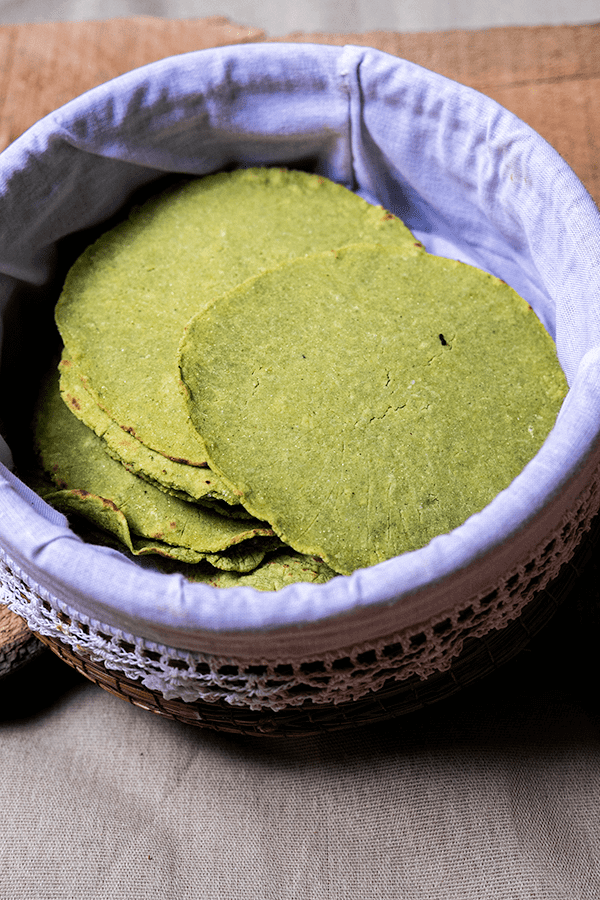
    Green nopales corn tortillas in a cloth-lined basket
    Stack of cooked green nopales tortillas on a wooden board

    What to Make with Your Nopales Tortillas

    Once you have a stack of green tortillas, the possibilities are wide open. Make quesadillas with gouda or oaxaca cheese. Fry them in oil for homemade tortilla chips. Use them for chilaquiles — the beloved Mexican breakfast of fried tortillas simmered in salsa and topped with cheese and crema. Or simply serve them as a side with any Mexican dish and watch them disappear.

    Hands pulling apart a green tortilla quesadilla with melted cheese
    Folded green nopales tortillas on a white plate with nopal paddles and corn

    Frequently Asked Questions

    What is the difference between masa harina and regular corn flour?

    Masa harina is made from corn that has been treated through a process called nixtamalization — soaking dried corn in an alkaline lime solution. This process gives masa its distinct flavor and pliable texture. Regular corn flour or cornmeal is not nixtamalized and will not produce tortillas with the same taste or texture. Use masa harina specifically.

    Can I use store-bought nopales in a jar?

    Fresh nopales give the best color and flavor, but jarred or canned nopales work in a pinch. Rinse them well to remove the brine before blending. The color of the tortillas may be slightly less vibrant, but the flavor is preserved.

    Why does my masa dough dry out so fast?

    Masa dough loses moisture quickly when exposed to air. Keep the dough covered with a damp towel at all times while you are working with it. This is why the recipe instructs you to keep the unused dough covered as you press and cook each tortilla individually.

    Can I make these tortillas gluten-free?

    Yes — masa harina made from 100% corn is naturally gluten-free. Just verify the packaging to ensure it was not processed in a facility that also handles wheat if you have celiac disease or a serious gluten sensitivity.

    How thick should I press the tortillas?

    For tacos and quesadillas, press the tortilla fairly thin — about 2 to 3mm. For wraps or thicker applications like tlayudas, press slightly thicker. A good tortilla should be thin enough to fold without cracking but thick enough to hold fillings without tearing.

    Can I freeze the raw dough?

    Yes. Form the dough into small balls, place them on a baking sheet, and freeze until solid. Transfer to a freezer bag and store for up to 2 months. To use, thaw at room temperature for 20 to 30 minutes, then press and cook as normal.

    Stack of green nopales corn tortillas on a wooden table

    Nopales Tortilla

    Prep Time 15 minutes
    Cook Time 20 minutes
    Total Time 35 minutes
    Course: Bread
    Cuisine: Mexican
    Calories: 120

    Ingredients
      

    green water
    • 1 nopales
    • ¼ cup spinach
    • 3 cups water
    Masa Dough
    • 3 cups masa corn flour
    • 1 tsp sea salt

    Equipment

    • high speed blender

    Method
     

    Green Water
    1. In a high speed blender, add the nopale, spinach, and water. Blend until very smooth and see no clumps or chunks of greens. About 1 minute.
    Masa Dough
    1. In a large mixing bowl, add the flour and salt. Mix well. Make a dwell in the middle and add the green water. Use your hands and start to mix and incorporate the dough until you see no white but all green around. Put a wet towel on top while you get the stove ready. The masa dough dries out very quickly, so keeping it moist is important.
    2. Heat the grill or large pan on medium high heat.
    3. Meanwhile take your tortilla presser. Lay two piece of plastic or wax paper inside.
    4. Roll a small round dough about 1" in diameter and press it between the two plastic sheets. Press hard on the tortilla presser. I like to use my body weight and give it one hard press.
      Release and peel one sheet of plastic off the dough. gently lift the tortilla and place it on your hand. Lift off the other side of the tortilla from the plastic.
      Gently and carefully place the raw tortilla on the grill and cook 1 minute on each side or until it is slighly brown. Repeat
    5. After each tortilla has finished cooking, place the tortilla in between two towels to keep it moist and warm. I recommend to also place it in a container with the towel and tortilla to keep it warm and fresh.
  • Refreshing Homemade Pico de Gallo – Original Mexican Recipe

    Refreshing Homemade Pico de Gallo – Original Mexican Recipe

    Fresh, bright, and ready in 15 minutes — this refreshing homemade pico de gallo is the original Mexican recipe that belongs on every table. With just five simple ingredients and zero cooking required, it is the kind of salsa that makes everything taste better: tacos, grilled meat, eggs, crackers, and anything in between.

    This post may contain affiliate links. If you purchase through these links, I may earn a small commission at no extra cost to you. Thank you for supporting Love & Harvest!

    homemade pico de gallo

    What Makes This Pico de Gallo Authentic

    Homemade pico de gallo is one of the most fundamental salsas in Mexican cuisine. The ingredients are straightforward: ripe roma tomatoes, red onion, cilantro, serrano pepper, lime juice, and sea salt. If you had to pick only three essential ingredients it would be tomato, lime, and onion — these three form the backbone of every authentic version. No cooking, no blending, no shortcuts. Just fresh produce chopped and tossed. Serve it alongside the Nopales Green Tortillas or the Salsa Macha from Veracruz for a full Mexican spread.

    Ingredients Deep-Dive

    Roma Tomatoes

    • Why it matters: Roma tomatoes are the ideal choice because they have thick flesh, low moisture, and fewer seeds than other varieties. This means your pico de gallo stays firm rather than turning watery. Always choose tomatoes that are deep red, firm to the touch, and plump — avoid anything soft or bruised.

    Red Onion

    • Why it matters: Red onion provides a sharp, slightly sweet bite that white or yellow onion does not. It also adds a beautiful purple-pink pop of color. Chop it finely so it distributes evenly through the salsa without overpowering any single bite.

    Cilantro

    • Why it matters: Cilantro is the aromatic backbone of pico de gallo. Use both the leaves and the stems — the stems carry just as much (if not more) flavor as the leaves. Choose bushy, bright green cilantro with thin stems for the freshest taste. Not a fan? Simply omit it — the salsa still works.

    Serrano Pepper

    • Why it matters: Serrano brings clean, grassy heat that is sharper than a jalapeno. Removing the seeds tones down the intensity significantly. If you prefer milder heat, swap it for a jalapeno. If you want more heat, add a second serrano or leave some seeds in.

    Lime Juice and Sea Salt

    • Why it matters: Lime juice is non-negotiable — it brightens all the flavors and acts as a natural preservative. Sea salt makes a noticeable difference over table salt: it has a rounder, cleaner flavor and a light crunch. Always use freshly squeezed lime and a quality sea salt. A lime juicer makes quick work of extracting every drop.

    homemade pico de gallo easy

    Pro Tips for the Best Pico de Gallo

    Pro Tip 1: Everything Must Be Fresh

    Because there is no cooking to mask flavors, freshness is everything here. Pick the best produce available. Touch the tomatoes — they should feel firm and plump with a deep red color. Onion, serrano, and lime should all be firm with no bruising. Cilantro should smell strongly aromatic with a full, bushy appearance.

    Pro Tip 2: Remove the Seeds from the Tomato

    Tomato seeds carry a slight bitterness and add extra liquid. Scoop them out with a spoon, then pat the flesh dry with a paper towel before chopping. This keeps the pico de gallo from becoming watery and keeps every bite clean and firm.

    3 ingredients pico de gallo
    homemade pico de gallo with canned tomatoes

    Pro Tip 3: Use Sea Salt

    Not all salt tastes the same. Table salt is sharp and overly salty. Sea salt has a natural mineral depth and a clean, balanced flavor that makes the salsa taste fresher. It also has a subtle crunch when you bite into it. If you need a reliable sea salt, a fine ground sea salt is easy to control in recipes like this.

    Pro Tip 4: Serve Cold

    Chill the finished pico de gallo in the fridge for at least 15 minutes before serving. Cold temperatures lock in the freshness and make all the flavors more vibrant. Before bringing it to the table, give it one more toss so the lime juice redistributes through the entire salsa.

    Pro Tip 5: Use Both the Stem and Leaves of Cilantro

    The stem of cilantro has concentrated flavor — arguably more than the leaves. Do not discard it. Chop the entire stem and leaf together. This is how it is done in traditional Mexican kitchens, and it makes a difference.

    Pro Tip 6: Serve in a Molcajete

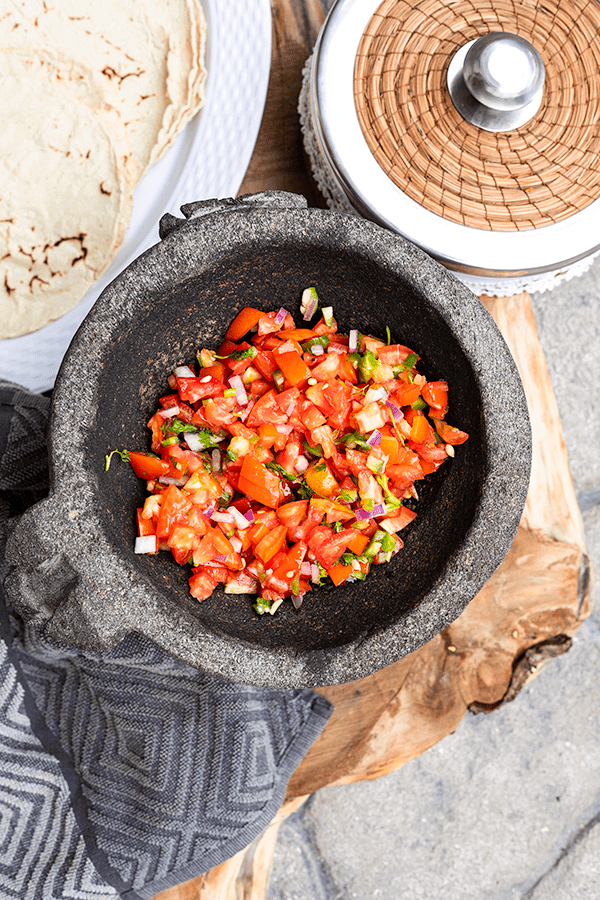
    A molcajete — a Mexican mortar and pestle carved from volcanic stone — makes the most stunning serving vessel for pico de gallo. You do not need it to make the recipe, but serving it in one is the authentic touch that elevates the whole table. You can find the exact one I use on Amazon: Granite Molcajete Grinder 6-Inch. A food processor can chop the ingredients quickly if you are making a large batch, though the texture will be slightly more uniform than hand-chopped.

    homemade pico de gallo without cilantro
    homemade pico de gallo sauce

    What’s in Homemade Pico de Gallo?

    All raw vegetables, no oil: tomatoes, red onion, serrano, cilantro, lime juice and salt. It works for vegans and vegetarians.

    Frequently Asked Questions

    How long does homemade pico de gallo last?

    Stored in a sealed container in the refrigerator, pico de gallo lasts 3 to 4 days. After the first day, it will release more liquid as the salt draws moisture from the tomatoes. Simply drain the excess liquid before serving. The flavor actually deepens slightly on day two.

    Can I make pico de gallo ahead of time?

    Yes, with one adjustment: wait to add the lime juice and salt until 30 minutes before serving. You can chop and mix all the vegetables in advance and refrigerate them, then dress with lime and salt right before serving to keep the texture firm and fresh.

    Can I use canned tomatoes for pico de gallo?

    Yes, though fresh is always preferred. If using canned, choose whole peeled tomatoes, scoop out the seeds, and pat the flesh completely dry before chopping. Canned tomatoes have more moisture, so squeezing them well prevents a watery result.

    What do I eat pico de gallo with?

    Pico de gallo is endlessly versatile. Classic uses: tortilla chips, tacos, burritos, grilled fish or chicken, scrambled eggs, and quesadillas. It also works beautifully spooned over avocado toast, mixed into rice, or served alongside black beans.

    How do I make pico de gallo less spicy?

    Use one jalapeno instead of serrano — jalapenos are noticeably milder. Remove all seeds and white membrane from whichever pepper you use, as that is where most of the heat lives. You can also reduce the amount of pepper by half or leave it out entirely for a completely mild version.

    What is the difference between pico de gallo and salsa?

    Pico de gallo (also called salsa fresca) is chunky and raw — all the ingredients are diced by hand and mixed without cooking or blending. Traditional salsa is often cooked or blended and has a smoother, more liquid consistency. Both are delicious, but pico de gallo is crunchier and fresher in flavor.

    Fresh pico de gallo in a stone molcajete next to warm tortillas

    Homemade Pico de Gallo

    Fresh uncooked salsa with just a few ingredients. With only tomato, onion, cilantro, lime, and salt it is a simple dish that is perfect side to almost everything.
    Prep Time 15 minutes
    Total Time 15 minutes
    Servings: 4 people
    Course: Condiment
    Cuisine: Mexican
    Calories: 30

    Ingredients
      

    • 5 ripe roma tomato
    • ¼ red onion
    • 1 serrano pepper deseeded and chopped
    • 3 cilantro stem with leafs
    • 2 lime juiced
    • 1 tsp sea salt

    Method
     

    1. Wash the tomato with mild soup and rinse. Also give the onion, Serrano pepper, and cilantro a good rinse under running tap water. Dry with towel or paper towel.
    2. Cut the tomato and serrano pepper in half and take out the seed.
    3. Chop the tomato and Serrano pepper into ¼" pieces
    4. Finely chop cilantro and red onion.
    5. In a mixing bowl, put everything together: tomato, onion, Serrano pepper, cilantro, lime and sea salt together. Toss to make sure everything is well coated with lime juice. Serve immediately.

    Notes

    • If you’re not ready to serve right away, chop everything in a bowl and place it in the fridge. When you’re ready to serve, just add the lime juice and salt.
    • Serrano pepper too spicy? You can always replace it with jalapeño peppers to reduce the heat level.