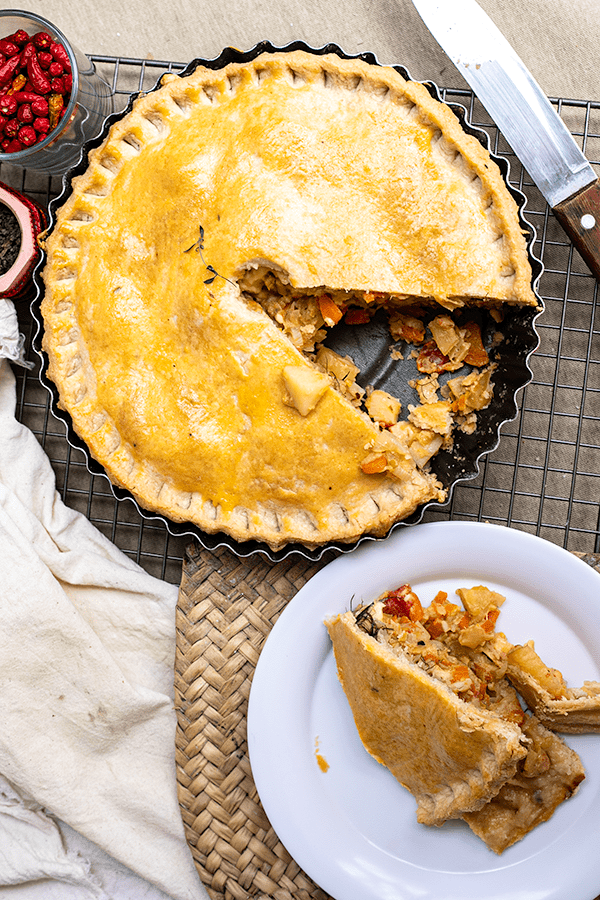
Cozy fall evenings call for something extraordinary — and this easy salmon pot pie delivers every time. Picture golden, flakey thyme crust shattering to reveal a creamy, steaming filling of tender salmon, winter vegetables, and melted gouda cheese. It smells incredible while it bakes, and it tastes even better.
This post may contain affiliate links. If you purchase through these links, I may earn a small commission at no extra cost to you. Thank you for supporting Love & Harvest!

This post is all about salmon pot pie — a favourite fall dish stuffed with salmon, winter vegetables, and cheese, then wrapped and baked in a flakey pie crust made with thyme.

Fall is here and comfort food is calling. This salmon pot pie is the answer — salmon and vegetable stuffing, manchego cheese, and a thyme pie crust. Sounds amazing right? The crust alone is worth making. Besides its delicious flavour, it is also a super easy recipe that can be made ahead of time. I make all my pie crusts with a food processor for minimal clean-up.

Salmon Pot Pie Flavour
Salmon is first marinated with soy sauce and sesame oil. This adds incredible depth of umami flavour to the salmon before it even hits the pan.
The seasonal fall vegetables are potato, leek, garlic, onion, tomato, and carrot — readily available and perfect for the colder season. Once you combine this with the thyme pie crust, uufff! You have got yourself a marvellous pot pie.

Why You Will Love This Recipe
- Easy: Pie dough is made with a food processor and the salmon stuffing is made on the stovetop. Then combined and baked.
- Incredible flavour: Salmon steamed with milk, cheese, and vegetables wrapped in a flakey thyme crust — the hardest part is waiting while the aroma fills your house.
- Filling: Great for cold winter days when you want something substantial.
- Make-ahead friendly: Pot pies can be made ahead or frozen. Great for busy nights.
- Economical ingredients: Besides the salmon, everything else is budget-friendly produce you can find anywhere.

Key Ingredients
Ingredients
Salmon
Fresh or frozen salmon both work here, cut into cubes.
- Why it matters: Salmon is marinated in soy sauce and sesame oil before cooking, which locks in umami flavour even through the baking process. The cubes absorb the creamy milk-and-cheese filling beautifully.
Thyme Pie Crust
Fresh thyme leaves are pulsed directly into the dough using a Lodge Cast Iron Skillet-friendly pastry method — lard, cold water, and apple cider vinegar for maximum flake. For a full deep-dive, see our guide on How to Make a Flakey Pie Crust.
- Why it matters: Cold fat hits hot oven air and creates steam pockets — that is what makes the crust flakey. Thyme adds an herbal note that pairs perfectly with seafood.
Gouda Cheese
Two cups of grated gouda melt into the filling and sit on top before the lid crust goes on.
- Why it matters: Gouda melts smoothly and has a mild nuttiness that complements the soy-marinated salmon without overpowering it. Use a deep Pyrex pie dish to hold all that cheesy goodness.
Dill
Fresh or dried dill sprinkled between the cheese and top crust.
- Why it matters: Dill and salmon are a classic pairing. While the pot pie bakes, the dill perfumes the steam inside, infusing every bite. If you love this combo, try our Crispy Panko Crusted Baked Salmon next.

Frozen or Fresh Salmon?
Fresh salmon is always best for unbeatable flavour, but frozen works well here too. Since we marinate the salmon with soy sauce — a strong flavouring agent — both options produce excellent results. The salmon cubes steam in a glorious pot of cheese, milk, and vegetables and come out flakey and soaked in flavour.

Seasonal Vegetables
Winter vegetables that are economical and easy to find: potato, leek, garlic, onion, tomato, and carrot. Nothing exotic — just your typical corner grocery store staples.
Thyme Pie Crust
From the base flakey pie crust recipe, we simply add fresh thyme to the dough. Thyme is a great herb to accompany seafood, especially salmon. Use a rolling pin to roll the dough evenly, and a pastry brush for the egg wash. Not to mention it looks absolutely gorgeous!

We Love Dill with Our Salmon
This comes with no surprise — we love adding fresh dill to salmon. Fresh or dried dill works. If you love salmon and dill together, do not miss our Crispy Panko Crusted Baked Salmon — another baked salmon recipe with dill, lemon, mayonnaise. And for something different with salmon, try our Ricotta Cheese Salmon Roll.

Fool-Proof Professional Tips
Pro Tip #1 — Cool Everything Before Assembling
Do not put hot salmon stuffing onto cold dough — it melts the butter and ruins the flakey structure. Let everything cool to room temperature first. We also need to freeze the assembled pie before baking, and you should never put hot food in the freezer.

Pro Tip #2 — Freeze the Pie 20 Minutes Before Baking
Pie crusts love to be cold. When cold dough hits hot oven air, it creates airy, flakey layers. Give the assembled pie at least 20 minutes in the freezer before it goes into a 400°F oven.

Pro Tip #3 — Crimp the Pie Crust Edge
Crimping the edges not only looks beautiful but helps the pastry and filling stay in place while cooking. Use the index finger of one hand to push the inner edge out while pinching the outer edge in with the thumb and index finger of the other hand. Repeat around the entire edge for a classic scalloped finish.


Pro Tip #4 — Let It Cool Before Cutting
The hardest part is waiting. Do not cut into a freshly baked pie — it is still cooking inside. Cutting too early dries the pie out by releasing all the steam. Rest it at least 10–15 minutes.
Pro Tip #5 — Cut Holes in the Top Crust for Ventilation
Always cut a hole in the centre of the crust for steam to escape. You can also poke a few holes around the crust with a fork before baking.

Frequently Asked Questions
Can I use canned salmon instead of fresh or frozen?
Yes. Drain the canned salmon well and break it into chunks before adding it to the filling. The texture will be slightly different but still delicious, and the soy-sesame marinade will compensate for the milder flavour.
Can I make this pot pie ahead of time?
Absolutely. Assemble the entire pot pie, wrap it tightly, and freeze it unbaked for up to one month. When ready to bake, go straight from freezer to oven — add 10–15 minutes to the bake time. Alternatively, fully bake it, cool it, and refrigerate for up to 3 days.
Can I use butter instead of lard in the pie crust?
Yes. Substitute an equal amount of cold unsalted butter. The crust will be just as flakey — lard produces a slightly more tender texture, but butter adds a richer flavour. Make sure both are very cold when you pulse them.
What can I substitute for gouda cheese?
Manchego, gruyere, or sharp cheddar all work well. Avoid fresh cheeses like mozzarella as they release too much liquid into the filling.
Why does my pie crust shrink when baking?
The dough was not rested long enough. Always refrigerate the dough disk for at least 30 minutes (or overnight) before rolling. Also, do not stretch the dough when placing it in the pan — let it fall into place naturally.
What size pie dish should I use?
A standard 9-inch deep-dish pie pan works best. A Pyrex deep dish pie plate is ideal because you can see the bottom crust browning through the glass.

Easy Salmon Pot Pie with Thyme Flakey Crust
Ingredients
Method
- Combine the salmon, soy sauce and sesame oil together. Mix well and let it marinate for 10 minutes.
- On medium heat in a large pot or pan, melt butter and sauté the chopped leeks, garlic, and white onions. 3 minutes.
- Add the carrot and potatoes. cook for 5 minutes.
- Toss the tomatoe in along with the chicken bouillon powder, milk, cream, salt, and pepper. Turn the heat to low and cook for 10 minutes with a lid. Turn off the heat with the lid off and let the mixture cool to room temperature.
- Meanwhile, put the thyme leafs, flour, and salt in the food processor. Pulse the flour mixture so it is well combined. Open the lid and ddd small chunk of lard into the food processor. Close the lid.
- Combine the cold water and vinegar together.
- Add half the cold water mixture in the food processor and pulse it 7 times. Slowly drizzle the rest of the water in to the food processor while you do quick pulses. Keep pulsing the mixture when the cold water runs out. When the dough starts to form and pull away. Take the lid off and divide the dough into two parts. Flatten the dough into a flat disk and put it in the fridge for at least 30 minutes or overnight.
- On a floured surface, pie dough, and sprinkle it with a little flour. Roll out any creases and roll it out just big enough to cover your pan.
- Add the salmon filling into the pie. Place thinly sliced cold butter on top of the filling. Then top it off with grated cheese and dill. Place the other rolled out pie dough over the top of the pan, folding up the corners. Cut a hole in the middle for venting.
- Place the pie in the freezer for 20 minutes.
- Preheat oven to 400°F
- Before you put the pie in the oven, brush the top of the pie with egg wash.
- Bake at 400°F for 20 minutes, then lower heat to 350°F, and bake 10 more minutes.
- Let it cool for at least 10-15 minutes before cutting into the pie.