
Tag: pasta

  • BEST Pumpkin Ravioli With Sage Butter

    BEST Pumpkin Ravioli With Sage Butter

    If you have ever wanted to make restaurant-quality pasta at home, this is the recipe. Pumpkin and spinach ravioli wrapped in chewy homemade dough, finished with sage butter sauce and toasted pecans — the flavour is so layered and the texture so luxurious that guests will genuinely think you ordered from an Italian restaurant. The cost is a fraction, and the satisfaction of making it yourself is something no delivery can touch.

    This post may contain affiliate links. If you purchase through these links, I may earn a small commission at no extra cost to you. Thank you for supporting Love & Harvest!

    Pumpkin ravioli

    Why You Will Love This Pumpkin Ravioli

    Pumpkin and spinach are two ingredients that pair beautifully together — kind of like wine and cheese. The taste is autumnal and exquisite in texture. Pureed pumpkin and spinach folded with panela cheese and cream cheese give the filling a velvet consistency. Lightly seasoned with nutmeg is the secret that brings hints of warmth and nuttiness. A mature dish that can be enjoyed by the whole family.

    If you love this pasta, try our homemade pesto gnocchi next — it uses a similar approach of hand-crafted pasta with bold sauce. For a vegetable-forward pasta, our fresh beet pasta is another showstopper worth trying.

    Ingredients Deep-Dive

    Pumpkin

    The pumpkin used in this recipe is the green Mexican variety — sweeter than the orange variety commonly seen in North America. If you have a variety or canned version you prefer, use what you have. The key is that the pumpkin is fully roasted and pureed to a smooth, thick consistency before going into the filling.

    • Why it matters: Wet pumpkin filling will tear the ravioli during sealing and boiling. Roast the pumpkin first and let it cool completely so excess moisture evaporates.

    Panela Cheese

    Panela is a fresh, smooth Mexican cheese made from pasteurized cow’s milk — low in calories and mild in flavour. It works perfectly here because it blends smoothly into the filling without overpowering the pumpkin. If panela is hard to find, substitute with white cheddar or feta.

    • Why it matters: The cheese adds a creamy, slightly salty counterpoint to the sweet pumpkin. Without it, the filling tastes flat.

    Cream Cheese

    Combined with the panela, cream cheese is responsible for that oozy, luxurious quality when you cut the ravioli in half. It also helps bind the filling so it holds its shape inside the pasta.

    • Why it matters: Cream cheese is what makes this filling feel restaurant-quality rather than homemade.

    Spinach

    Pumpkin and spinach are natural partners. Spinach adds colour, texture, and a mild earthiness that balances the sweetness of the pumpkin. Chop it finely so it distributes evenly through every bite.

    • Why it matters: Without spinach, the filling is visually monotone and misses the textural contrast that makes every bite interesting.

    Sage

    Fried sage in butter is one of the best-kept secrets in fall and winter cooking. When sage leaves hit hot butter, they crisp up and release an intense herbal, almost floral aroma. The flavour transforms completely from raw — it becomes deep, nutty, and satisfying.

    • Why it matters: Sage butter is what elevates this from good pasta to extraordinary pasta. A few leaves of fresh sage make a restaurant-quality sauce in minutes.

    Pecans

    Toasted pecans in butter have a magical, warm, autumnal smell that signals fall is here. They add a satisfying crunch to the sauce and amplify the nuttiness of the sage butter. When pecans are mixed into this beautiful butter mixture, everything about the sauce makes perfect sense.

    • Why it matters: Texture contrast is essential in pasta dishes. The crispy pecan against the soft, chewy ravioli is what makes each forkful memorable.

    Pasta Maker

    A pasta maker attachment makes producing consistent, thin pasta sheets effortless. A ravioli cutter stamp ensures perfectly shaped, evenly sealed ravioli every time. A simple rolling pin works too if you prefer to roll by hand.

    • Why it matters: Consistent dough thickness means every ravioli cooks in the same time. Uneven sheets produce some ravioli that are raw and others that are overcooked.

    what goes with pumpkin ravioli

    Making the Ravioli Dough

    The Philips Pasta Maker makes producing consistent ravioli sheets effortless. I attach the lasagna disc, weigh all the ingredients, put the dry ingredients in the hopper, whisk the liquids separately, and let the machine run. Within 3 minutes it extrudes a perfect pasta sheet. The first 6 inches tend to be uneven — cut those off and put them back in the hopper. Then measure alternating sheets of 12 inches (bottom) and 12.5 inches (top) and keep them covered with a towel so they do not dry out.

    savory pumpkin ravioli

    The Secret to the Sage Butter Sauce

    This sauce is simple but its combination of butter, crispy sage, toasted pecans, apple cider vinegar, and heavy cream is genuinely gourmet. The secret: once the thick sauce is ready, pour it over hot ravioli and add a splash of starchy pasta water. The hot pasta water emulsifies with the thick sauce into a silky, creamy coating. This is the same technique used in fine dining kitchens.

    pumpkin ravioli jamie oliver

    This Recipe Is Vegetarian — But It Does Not Have to Stop There

    This pumpkin ravioli recipe is vegetarian as written. If you want to add protein, some delicious options are: seared tuna, grilled steak, poached chicken, or grilled sausages. The richness of the sage butter sauce stands up well to bold proteins.

    pumpkin ravioli with sage butter

    Frequently Asked Questions

    Can I make the ravioli dough without a pasta machine?

    Yes. Roll the dough by hand with a rolling pin to about 1–2mm thickness. A pasta machine produces more consistent results, but hand-rolled dough works perfectly well. The key is getting the sheet thin enough so the dough cooks through in 4 minutes.

    Why does my ravioli fall apart in the water?

    The two most common causes: the filling was too wet, or the edges were not sealed firmly enough. Make sure the pumpkin puree is dry before mixing the filling, and always brush the edges with egg wash before pressing the top sheet down. Press firmly around each pocket of filling.

    Can I freeze homemade ravioli?

    Yes. Lay the uncooked ravioli flat on a parchment-lined baking sheet and freeze until solid, then transfer to a zip-lock bag. Cook directly from frozen in boiling salted water for 6–7 minutes instead of 4.

    What can I substitute for sage?

    Thyme or rosemary can replace sage if needed. The flavour will be different — thyme is more subtle, rosemary is more assertive — but both work with browned butter and pecans.

    Can I make the filling ahead of time?

    Yes. The pumpkin spinach filling can be made 1 day ahead and stored covered in the fridge. This actually helps the flavours meld. Bring it to room temperature before filling the ravioli.

    What pasta shapes can I use this filling for?

    This filling works in any enclosed pasta shape — tortellini, cappelletti, or large stuffed pasta shells baked with extra sage butter sauce on top are all fantastic variations.

    Pumpkin ravioli in sage cream sauce with sausage on a blue plate

    Pumpkin Ravioli with Sage Butter

    Pumpkin ravioli wrapped in a chewy dough drizzled with sage butter is a culinary experience. Rich in flavour and texture, it is like eating in an up-scale restaurant, minus the cost. Print Recipe Pin RecipePrep Time:35 minsCook Time:15 minsServings: 6 people

    Ingredients

    Ravioli Dough

    • 550 g all purpose flour
    • 4 g sea salt
    • 170 g 2 eggs + milk
    • 37 g water

    Pumpkin Spinach Filling

    • 1.5 cups pumpkin puree
    • 2 garlic clove grated
    • ¼ tsp ground cinnamon
    • ½ tsp ground nutmeg
    • ½ cup panela cheese or cheddar cheese
    • 4 oz cream cheese
    • ¼ cup chopped spinach
    • 2 tsp sea salt
    • pepper to taste

    Sage Butter Sauce

    • ½ cup butter
    • 2 garlic clove grated
    • 20 sage leaves
    • ¼ cup chopped pecans
    • 3 tbsp apple cider vinegar
    • ½ cup heavy cream
    • ½ tsp ground nutmeg
    • 1 tsp sea salt
    • ½ tsp ground black pepper

    Instructions

    Ravioli Dough Using Philips Pasta Machine

    • Attach the lasagna disc to the machine and tightly screw it on.
    • Weigh all the ingredients. Add the flour and salt into the pasta machine’s hopper.
    • In a separate bowl, whisk together all the liquids: eggs, milk, and water until fully combined.
    • Turn the machine on and set it for 3 minutes. Put the lid on and let it run.
    • Slowly and gradually add the liquid into the reservoir at the top of the lid.
    • When the machine finishes mixing, it will begin extruding pasta. The first 6 inches will be uneven — cut them off and place back into the hopper.
    • Measure and cut alternating sheets of 12 inches (bottom) and 12.5 inches (top). Cover sheets with a towel so they do not dry out.
    • Place the bottom sheet on a table. Scoop half a tablespoon of filling onto the sheet with 1-inch gaps. Brush beaten egg around each filling mound.
    • Carefully place the top sheet over the filling, leaving space at the top. Press firmly around each filling pocket to seal.
    • Cut the ravioli with a knife or ravioli cutter. Place on a dry baking sheet and repeat until the dough and filling are used up.
    • Fill a large deep pot with water and bring to a boil. Add 2 tsp of salt. Stir the pot 5 times in the same direction until a vortex forms. Slowly add ravioli in batches of about 10 — do not overcrowd. Stir gently to prevent sticking.
    • Cook for 4 minutes, or until the ravioli floats. Drain and set aside. Reserve a splash of pasta water.
    • Meanwhile, make the sauce: melt together butter, garlic, pecans, and sage in a large skillet over medium heat. Cook, stirring occasionally, until the butter browns and the sage is crisp, 4–5 minutes. Remove the sage leaves and set aside.
    • Reduce heat to low. Add the apple cider vinegar, cream, nutmeg, salt, and pepper. Simmer 1 minute. Add the ravioli and a splash of pasta water, gently tossing to combine. Remove from heat.
    • Serve ravioli topped with crispy sage leaves.
  • Fresh Beet Pasta & Lemon Garlic Alfredo

    Fresh Beet Pasta & Lemon Garlic Alfredo

    This post may contain affiliate links. If you purchase through these links, I may earn a small commission at no extra cost to you. Thank you for supporting Love & Harvest!

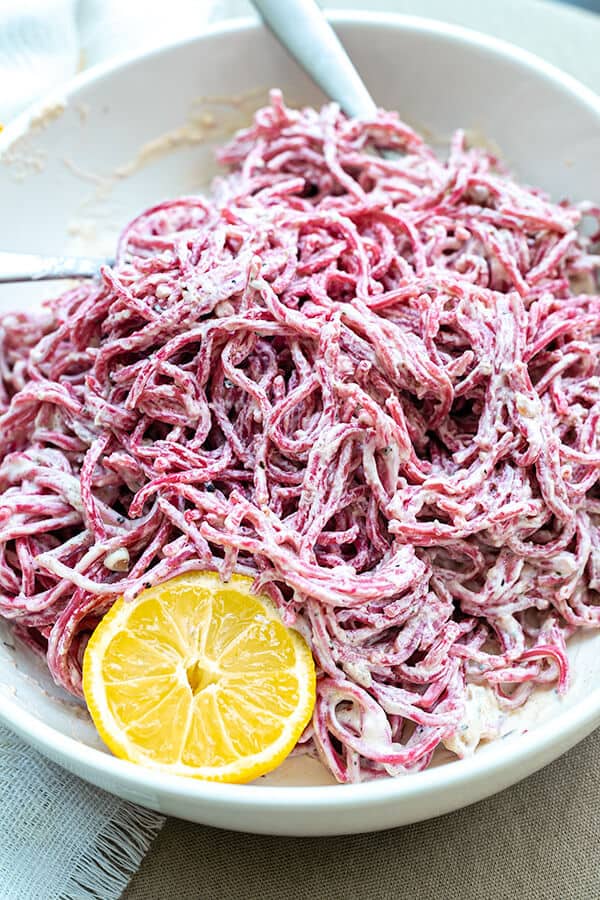
    The first time you serve this pasta, people will think you spent hours in the kitchen. You didn’t. The colour comes from beet juice, the creaminess from a simple lemon garlic alfredo, and the pasta itself takes about 3 minutes in a machine. What you get on the plate looks stunning, tastes extraordinary, and is 100% vegetarian. It’s become one of our family’s most requested meals — including by the kids, who love calling it “pink pasta.”

    beet pasta

    Why You’ll Love This Beet Pasta

    • Stunning colour — The beet turns the pasta a vivid magenta. Once it meets the cream sauce it shifts to a deep rose-pink. It’s genuinely beautiful on a plate.
    • Unbeatable fresh pasta flavour — There is no comparison between homemade fresh pasta and store-bought dried. The texture is silky, the bite is tender, and the beet adds a subtle earthiness that’s unlike anything else.
    • Fun family project — Kids love feeding the pasta machine and watching the pink noodles come out. It turns cooking into a small event.
    • Ready in 3 minutes — With the Philips Pasta Maker, the dough kneading and extrusion is automated. You handle the prep and cooking; the machine does the labour.

    beet pasta with lemon garlic Alfredo

    Ingredients Deep-Dive

    Ingredients

    Beet — The Star Ingredient

    Beets are available year-round in most markets in red, purple, yellow, and white varieties — sometimes even striped. For this pasta, use red or purple for the most dramatic colour.

    The earthy, slightly sweet flavour of beet is the reason this pasta needs a bright sauce. The lemon tang in the alfredo brings out the beet’s natural depth and creates a balance that makes the dish feel complete rather than just colourful.

    Flour — All-Purpose or Bread Flour?

    All-purpose flour is the standard choice for homemade pasta — it produces a soft, pliable dough with good stretch. If you want a chewier pasta with more bite, substitute 50% of the all-purpose with bread flour. Bread flour has higher protein content which creates more gluten structure — the pasta cooks firmer and has more resistance when you bite through it. Both versions are excellent; it’s a texture preference.

    The Pasta Machine

    This recipe is built around the Philips Pasta and Noodle Maker. It kneads the dough, extrudes it through a disk, and produces fresh pasta in under 3 minutes. You can change the disk to produce spaghetti, penne, fettuccine, and other shapes. It’s one of the most-used machines in our kitchen. If you want the upgraded version with a built-in scale and more disk options, the Philips Avance Automatic Pasta Maker Plus is worth the investment if you make pasta regularly.

    Cream Cheese — The Alfredo Secret

    The alfredo sauce uses cream cheese instead of heavy cream. This produces a sauce that’s thicker, tangier, and more stable — it doesn’t break or turn greasy when reheated the way cream-based alfredo does. Philadelphia Cream Cheese is the standard choice; its consistent quality makes the sauce reliable every time. The cream cheese melts into the hot milk and butter without needing to be at room temperature.

    Lemon — Juice and Zest

    Both the juice and the zest go into the sauce. The juice provides the acid that cuts through the fat and makes the cream cheese sauce taste bright rather than heavy. The zest adds fragrance — a floral lemon note that elevates the dish without being harsh. Meyer lemons are slightly sweeter; Eureka lemons are more traditional. Either works. Always strain out seeds when squeezing — biting into a lemon seed is memorably unpleasant.

    Parmesan Cheese

    Use a block of real Parmigiano-Reggiano and grate it yourself. The pre-grated powdered version has added anti-caking agents that prevent it from melting properly — it clumps in the sauce rather than incorporating smoothly. A fresh block has a nutty, crystalline richness that makes the difference between a good alfredo and a great one.

    beet pasta recipe

    Pro Tips

    Pro Tip 1: Blend the Beet, Don’t Juice It

    You have two options for adding beet to the pasta dough: juice the beet (concentrated, vibrant colour) or blend the cooked beet into a smooth puree (retains all the fibre). Juicing produces a slightly more electric colour; blending keeps the whole beet in the pasta without any texture difference in the finished noodles. I prefer blending: you use the whole beet and lose nothing in the process. Blend on high until completely smooth with no chunks before adding to the pasta machine.

    Pro Tip 2: The 216g Liquid Measurement

    The Philips Pasta Maker requires a specific liquid-to-flour ratio for optimal results. For this recipe: place a container on a scale, zero it, add 2 eggs, then fill with beet puree until the total reaches exactly 216g. This precision ensures the dough is the right consistency every time — not too dry to extrude, not too wet to hold its shape.

    Pro Tip 3: Add Protein to Make It Hearty

    This is a naturally vegetarian dish. Grilled chicken, sautéed shrimp, or seared beef strips all work beautifully alongside the pasta and sauce. Make a slightly larger batch of the alfredo sauce if you’re adding protein so you have enough to coat everything generously.

    What to Serve Alongside

    For a complete dinner table, this beet pasta pairs magnificently with our Beet and Avocado Sashimi Appetizer — both dishes feature beet and create a visually stunning spread. A crisp green salad or garlic bread rounds out the meal. For a meat option to accompany, our Best Homemade Fried Chicken provides a satisfying contrast to the pasta’s creaminess.

    beetroot pasta

    Frequently Asked Questions

    Do I need a pasta machine for this recipe?

    The Philips Pasta Maker automates the kneading and extrusion and makes the process fast and consistent. That said, you can make beet pasta by hand: mix the flour and beet-egg liquid into a dough, knead for 8–10 minutes until smooth, rest for 30 minutes, then roll thin with a rolling pin and cut into strips. It takes more time and arm strength, but the result is the same.

    Can I make this pasta without eggs (vegan)?

    Yes. Replace the eggs with additional beet puree. You’ll need to adjust the liquid amount slightly — start with the same 216g total and add a tablespoon more puree if the dough seems too dry. The pasta will be slightly less rich but still colourful and delicious. The alfredo sauce can be made vegan with plant-based cream cheese and milk.

    Can I make the pasta ahead of time?

    Fresh beet pasta is best cooked the day it’s made. If you need to make it ahead, lay the extruded pasta flat (not overlapping) on a floured baking sheet, dust lightly with flour, and refrigerate for up to 24 hours. Alternatively, allow the pasta to dry at room temperature for 2 hours, then store loosely in an airtight container for up to 2 days.

    Why does my beet pasta turn pink instead of deep red?

    This is normal. The alkaline proteins in the egg and the heat from boiling water both affect the beet’s pigment. Once you add the cream sauce, the pasta turns a beautiful rose-pink. If you want a deeper colour, use more beet puree and less egg, or use only the beet without egg (vegan version).

    Can I use beet powder instead of fresh beet?

    Yes. Beet powder is a convenient alternative — add 2–3 tablespoons to the flour before mixing. You’ll still get colour and a mild beet flavour, though it’s slightly less vibrant than fresh beet puree. The nutritional profile is also slightly different since processing removes some of the whole beet’s fibre.

    What pasta shapes work best with this sauce?

    Spaghetti and fettuccine are the most visually striking — the long strands show off the colour best. Penne and rigatoni also work well because the alfredo sauce clings inside the tubes. Avoid very thin pasta shapes like angel hair — the sauce is too thick and they tend to clump.

    Pink beet pasta tossed in lemon garlic Alfredo with a lemon half

    Fresh Beet Pasta and Lemon Garlic Alfredo Sauce

    Delicious homemade beet pasta with a lemon garlic alfredo sauce. It's tangy, garlicky, and oh so creamy! Print Recipe Pin RecipePrep Time:20 mins35 minsCourse: Main CourseCuisine: American, MediterraneanKeyword: alfredo, beet, fresh, fresh pasta, garlic, homemade pasta, lemon, pasta, phillips pasta and noodle machineServings: 6 people

    Equipment

    • high speed blender
    • Philips Pasta and Noodle Maker

    Ingredients

    Beet Pasta

    • 1 medium size beet root
    • 2 eggs
    • 550 g all purpose flour
    • 7 g salt

    Lemon Garlic Alfredo Sauce

    • ½ cup butter
    • 3 garlic clove grated
    • 1½ cup whole milk
    • 1 8oz cream cheese
    • 2 tsp sea salt
    • ½ lemon juice
    • lemon zest
    • ¼ cup parmesan cheese grated
    • black pepper

    Instructions

    Beet Pasta

    • Peel the skin off the beet and cut it in half. fill a small pot with water and put the beets in. cover it with a lid and cook it for 10 minutes. Let it cool, but reserve the water.
    • Place the beet within a high-speed blender with ½ cup of its reserved water. Blend on high until it is a smooth smoothie. set aside.
    • On a measuring scale, put a medium size container, and turn it on. Make sure it says 0g. Add 2 eggs to the container and fill the container up with beet juice until it reaches 216g. Set aside.

    Philips Pasta machine

    • take out the Philips pasta and noodle maker. Make sure you have the spaghetti disk attached to the ends. Open the lid, and put in the flour and salt. Close the lid.
    • Turn the machine on and press ‘Start.’ Slowly pour in the beet and egg liquid.
    • Let the machine knead the dough for 3 minutes. It will beep once it is ready to extrude the pasta.
    • Cut the pasta when it is about 20-25cm long.
    • Lay the fresh pasta on a baking sheet, and don’t overlap the pasta on top with more.

    Cooking the Beet Pasta

    • Using a large pot, fill it ¾ full and add 3 tsp of salt (roughly 4L of water). Wait for it to boil.
    • Once the water is rapidly boiling, slowly add the fresh pasta to the water. Immediately stir it with chopsticks or something soft that won’t break the pasta apart. Cook for 2 minutes.
    • Add the cooked pasta to a bowl of water. Move the noodles in the water around. Rinse and repeat at least once. strain the noodles and place them in a large bowl. Again don’t place more noodles on top of the weight will have the noodles stick together.

    Lemon Garlic Alfredo Sauce

    • In a medium-size pot, turn heat to medium-high and place butter inside until melted. Add the garlic and cook for 2 minutes or until soft. Add the milk and cream cheese. Turn the heat to low. Add sea salt.
    • Add the fresh beet pasta to the sauce and give it a few good stirs. Add the lemon juice and parmesan cheese. Softly toss the noodle until the cheese is melted and the alfredo sauce is well coated with the pasta.
    • Garnish pepper on top. Serve immediately.