This post may contain affiliate links. If you purchase through these links, I may earn a small commission at no extra cost to you. Thank you for supporting Love & Harvest!
After years of failed pie crusts, I finally cracked the code. This all-butter flakey pie crust recipe comes together in a food processor in minutes and delivers that shatteringly crisp, melt-in-your-mouth texture every single time — whether you’re making a classic apple pie or a savory pot pie.

Why This Recipe Works
I’ve made a gazillion bad pie crusts over the years. From sticky disasters to crumbly messes that fell apart before they hit the pie plate, I’ve lived through every pie failure imaginable. Now I have the recipe, the tips, and the confidence to share it with you.

I started making pie at a young age to impress my dad, who loves desserts — especially pies. We used to visit a pie shop in West Vancouver, and as prices climbed year after year, I decided to challenge myself: make him the same (or better) pie at home. Little did I know, perfecting that crust was harder than I expected without the right tips!

Ingredient Deep-Dive
Ingredients
All-Purpose Flour
- Why it matters: Provides structure without too much gluten. Measure by weight (150g) for consistent results — cup measurements vary too much.
Cold Unsalted Butter
- Why it matters: All-butter crusts deliver unbeatable flavor. The cold butter creates steam pockets in the oven, producing those beautiful flaky layers. Cut into ½-inch cubes and freeze for 15 minutes before using.
Ice Water + Apple Cider Vinegar
- Why it matters: The vinegar inhibits gluten development, keeping the crust tender. Always use ice-cold water — warm water melts the butter before it hits the oven, destroying flakiness.
Fine Sea Salt
- Why it matters: Enhances all the buttery flavors. Use fine sea salt so it distributes evenly without leaving salty pockets.
What is Parbaking?
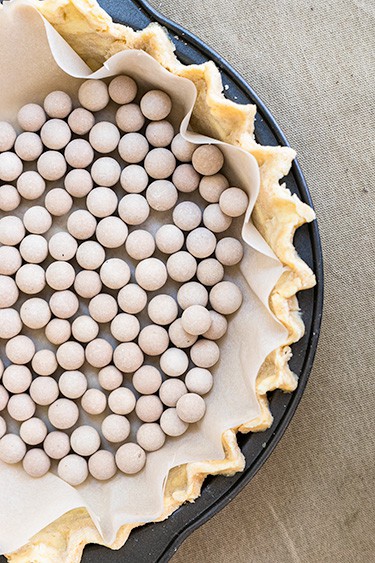
Parbaking refers to partially baking a bottom crust before filling it and continuing to bake. It is also known as blind baking. It is typically used with single-crusted pies to ensure the crust bakes fully. Pie shells can be parbaked up to 24 hours in advance because they refresh during their second trip to the oven.
To parbake: shape the pie crust into the pie plate. Place parchment paper on top of the crust and put weights on it. I like to use a Pyrex pie dish and ceramic weights to hold the shape. If you don’t have ceramic pearls, dry beans work perfectly — just use them within a week after parbaking.

Remember to lift the opposite edges of the parchment paper to remove all the ceramic pearls. The dough is buttery and slippery underneath — dumping instead of lifting will send pearls everywhere.

Butter or Lard?
The right choice is to go all in with butter. The flavor is unbeatable. However, for a more economical option, half butter and half lard also works beautifully — you still get that hint of butter with an extremely flakey, crispy texture.
Vinegar or Vodka?
Both vinegar and vodka prevent gluten from developing in the dough — gluten is the enemy of flakiness. For a single-crust recipe, add 1 teaspoon of white or apple cider vinegar to the ice water. Alternatively, add 1 tablespoon of vodka. I always go with apple cider vinegar — it adds a slight tang that works beautifully in both sweet and savory pies.
Mixing the Dough with a Food Processor
Using the Cuisinart Food Processor is the quickest method for cutting butter and mixing dough. Start by cutting the butter into 1-inch pieces. Toss the butter in the flour and salt to coat, then add everything to the food processor. Pulse in 3-second bursts until the butter pieces are walnut-half sized. Slowly add your ice water, no more than 10–15 short pulses total. Visible pea-sized butter chunks in the dough are a good sign — that promises a super flakey crust.

Troubleshooting Common Errors
Pie Error: Dough is Too Wet or Too Dry
Too Wet: Sticky dough means too much water. Dust generously with flour when rolling out. Over-wet dough bakes up tough and hard.
Too Dry: Flatten the dough to half an inch, dip your hands in ice water, and flick drops of water onto the surface. Fold (don’t knead) a few times until incorporated. Chill for 30 minutes before using.
Pie Error: Edges of the Rolled-Out Dough Break
This happens to everyone. Patch tears with a scrap piece of dough. Brush away excess flour from the patch area, dip your finger in cold water, and press the scrap onto the problem spot.
Pie Error: Dough Breaks Before Landing on Pie Plate
Once rolled out to the right size for your pie dish, drape the dough over your rolling pin to transfer it. Hanging it on the pin is far easier to move and much less likely to break.
Fool-Proof Professional Tips
Pro Tip #1: Bake at 425°F
Flakey doughs love high temperatures. When cold fat hits the oven heat, the moisture evaporates creating pockets of steam. Those steam pockets push up the dough, creating lightness and flakiness. If your crust isn’t crisp enough, your oven likely isn’t hot enough.
Pro Tip #2: Chill the Dough
Chilling is the most important step. Cold dough is easier to work with, holds its shape better, and bakes up flakier. Chill at three key moments: after the dough comes together, before crimping, and before baking.

Pro Tip #3: Use the Freezer
Give your assembled pie a 15–30 minute freeze before it goes into the oven. This ensures the crust is ice-cold when it hits that blast of heat, giving you maximum flakiness.
Pro Tip #4: Use Minimal Flour When Rolling
Too much flour dries out the dough. Roll it out on parchment paper instead — no sticking to the counter and you use far less flour. Peel the parchment off once you have your ideal shape.
Pro Tip #5: Use a Kitchen Scale
Accuracy matters for pie crust. Use a kitchen scale to measure ingredients by weight rather than cups. Cup measurements vary depending on how flour is packed — weight is always precise.
Frequently Asked Questions
Can I make this pie crust without a food processor?
Yes. Cut the cold butter into the flour mixture using a pastry cutter or two forks until you reach pea-sized pieces. Work quickly so the butter stays cold. A food processor is faster, but hand-mixing works perfectly.
How far in advance can I make the dough?
The dough disk can be refrigerated tightly wrapped for up to 3 days, or frozen (wrapped in plastic then foil) for up to 3 months. Thaw overnight in the fridge before rolling.
Why is my pie crust shrinking in the oven?
Shrinkage happens when the dough hasn’t rested and chilled enough, or when it was stretched rather than laid gently into the pie plate. Always chill before baking and let the dough settle into the pan without pulling it.
Can I use salted butter instead of unsalted?
Yes, but omit the added salt in the recipe. Unsalted is preferred because it gives you control over the saltiness and typically has less water content.
How do I get a golden brown top crust?
Brush the top crust with an egg wash (1 egg + 1 tablespoon water) or a milk wash just before baking. This gives a beautiful golden color and slight shine.
Can I use this crust for savory pies?
Absolutely. This is a neutral, all-butter crust that works for both sweet pies (apple, cherry, pumpkin) and savory pies (pot pie, quiche). For savory applications, you can add a pinch of herbs to the dough.

Super Flakey Crust
Ingredients
Equipment
Method
- Add the flour and sea salt into the food processor. Pulse it 5 times so it is well incorporated.
- Add the cold cubed butter. Close the lid. While you pulse the machine, add the ice vinegar water on top. Never let the machine run. Always fast pulses.
- Once the dough starts to come together and pull away from the sides. Stop and roll it into a flat disk together. Wrap it up with plastic wraps and put it in the fridge for at least 30 minutes to overnight. If there are still some flours at the bottom it is okay, just pat the flour onto the dough. Do not knead the dough. If you see little pea size of butter in the dough, that promises you the crust is going to be super flakey.
- This dough is best baked at 425°F (220°C).You can partake, blind-bake, or fill and bake as directed in the recipe of your choice.
Notes
Love this recipe? Try our Best Spiced Pumpkin Pie with Flakey Crust for the perfect filling to go with it, or explore our Instant Pot Black Garlic for a unique savory pie flavor addition. For more baking essentials, check out our Preserved Salty Lemons — a pantry staple that pairs beautifully with fruit pies.