Category: l&h blog

  • Celery Juice

    Celery Juice

    One glass of fresh celery juice every morning is the simplest habit in my day.

    Glass of fresh green celery juice seen from above with celery stalks

    This post may contain affiliate links. If you purchase through these links, I may earn a small commission at no extra cost to you. Thank you for supporting Love & Harvest!

    This post shows how I make fresh celery juice at home with a juicer.

    Celery Juice: Part of My Daily Routine

    In the early morning light, as dawn breaks through the kitchen window, there’s nothing quite as invigorating as a glass of fresh celery juice. This vibrant green juice has become a staple in my daily routine.

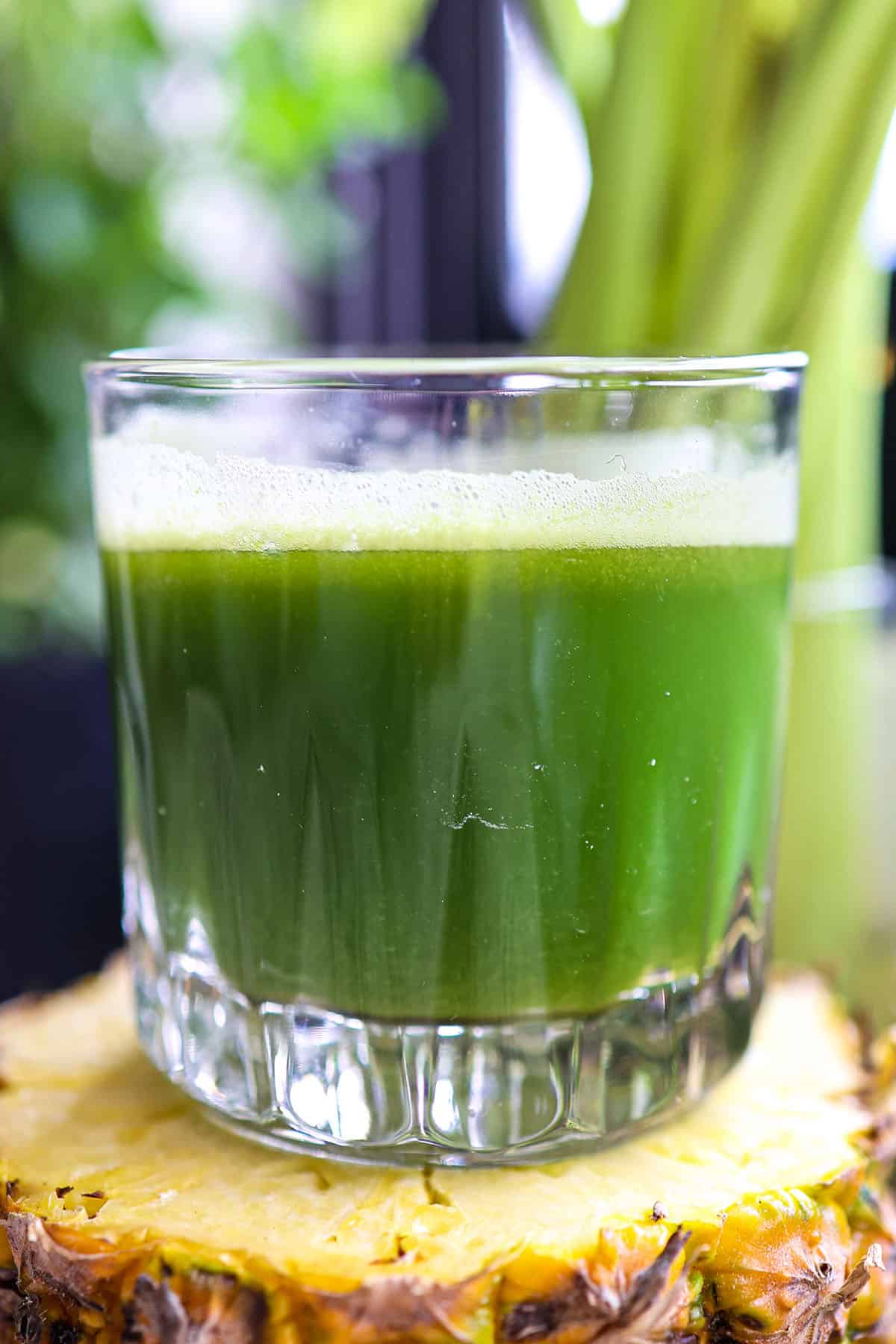
    Glass of celery juice on a pineapple slice with celery stalks behind it

    A hand holding a glass of celery juice in a garden with pink flowers

    Glass of frothy celery juice next to a jar of celery stalks

    Ingredients

    Celery

    • Why it matters: The star of the show. Use organic celery whenever possible to minimise pesticide exposure. One full bunch makes approximately 16 oz of juice. Wash it thoroughly before juicing.

    Your Juicer

    • Why it matters: A good centrifugal juicer extracts maximum juice quickly and is easy to clean — perfect for a busy morning routine. Drink the juice fresh and unfiltered within 15–20 minutes for the freshest taste.

    Frequently Asked Questions

    Do I need to juice celery, or can I blend it?

    Juicing is preferred. When you juice celery, you remove the fibre and drink only the liquid. If you blend it, strain it thoroughly through a fine-mesh sieve before drinking.

    Can I add other ingredients to my celery juice?

    Yes. Cucumber, lemon, ginger, or green apple are popular additions. Avoid adding fruit juice in large quantities as it raises the sugar content significantly.

    Is celery juice safe for everyone?

    Not for everyone. Those on blood thinners (warfarin) should consult their doctor as celery is high in vitamin K. People with kidney disease should also seek medical advice given the potassium content. Pregnant women should check with their healthcare provider before making it a daily habit.

    Can I make celery juice ahead?

    It is best fresh: celery juice oxidises quickly once extracted. If you must prepare it in advance, store it in an airtight glass jar in the refrigerator and drink within 24 hours. Avoid plastic containers as they can affect the flavour.

    Glass of frothy celery juice next to a jar of celery stalks

    Celery Juice

    Fresh celery juice made with a juicer and served right away for the freshest taste.
    Prep Time 5 minutes
    Total Time 5 minutes
    Servings: 1 person
    Course: Drinks
    Calories: 35

    Ingredients
      

    • 4-6 organic celery stalks

    Equipment

    • juicer

    Method
     

    1. Wash the celery thoroughly under cold water to remove any dirt or debris. Trim off the base of the celery bunch and any leaves. Optional: You can put the celery leaves into the machine, but the juice will be more bitter in taste.
    2. Cut the celery into smaller pieces that fit into your juicer chute. Feed the celery through the juicer, extracting the juice into a clean container.
    3. Pour the celery juice into a glass and serve immediately for the freshest taste. Optionally, you can add ice cubes or refrigerate the juice before serving.

    Glass of celery juice on a pineapple slice in front of a juicer

    For another morning drink, try our Mixed Berry Smoothie with Pomegranate and Nopal. If you enjoy making fresh beverages from scratch, our Easy Homemade Soy Milk is another crowd favourite worth bookmarking.

  • How to Grow Oyster Mushrooms

    How to Grow Oyster Mushrooms

    Deep in a small village in rural Puebla, Mexico, a government program is quietly changing the way families eat — and how they grow their own food. I tagged along on this six-week journey to San Mateo Coatepec to learn, hands-on, how to grow oyster mushrooms using nothing but plant scraps, clear bags, and a wood-burning fire. What I found was equal parts science, community, and pure wonder as white mycelium crept through corn husks right before my eyes.

    This post may contain affiliate links. If you purchase through these links, I may earn a small commission at no extra cost to you. Thank you for supporting Love & Harvest!

    How to grow oyster mushrooms at home

    This post covers the essential steps to grow oyster mushrooms at home — no fancy equipment, no complicated science. Just simple, proven methods straight from the field.

    What You Need Before You Start

    Ingredients & Equipment

    Mushroom Spawns

    Mushroom spawns are the seeds of your entire grow. If you know a reputable commercial seller, always go that route — their quality guarantees a higher success rate. If not, you can order online. A reliable mushroom grow kit is a great way to get started without sourcing spawn separately.

    • Why it matters: Low-quality spawn means poor colonization and weak mushrooms. Start right.

    Substrate

    The substrate is the growing medium where mycelium colonizes. Each mushroom variety has its own preferred substrate. The best substrate for oyster mushrooms includes cereal straws, corn husks, cottonseed hulls, corn cobs, and wheat or oat straws. In this program, we tested corn husks and amaranth stems. You can also find ready-made oyster mushroom substrate online.

    • Why it matters: Nutritional substrate = more mushrooms. Contaminated or depleted substrate = total failure.

    Corn husk substrate for oyster mushrooms

    Corn husk substrate

    Grow Bags

    Clear, translucent plastic bags are ideal for growing mushrooms. They allow you to watch the mycelium colonize and spot contamination early. We tested both special mushroom bags with filters and regular heavy-duty clear bags. A purpose-built spray bottle is also essential for maintaining humidity once mushrooms start to fruit.

    • Why it matters: Bag type affects CO2 levels, humidity retention, and ultimately the size and yield of your harvest.

    Steps on How to Grow Oyster Mushrooms

    This is a crash course — no lab, no complicated science. Just the essential steps as taught to young villagers in rural Puebla who needed results, not textbooks.

    Steps to grow oyster mushrooms

    1. Sterilize the Substrate

    The substrates we used are amaranth stems and corn husks. Sort through and remove large, sharp stems that could puncture the bags — only keep the softer material. Fill a large pot with fresh water and bring it to a boil over a wood fire (or stovetop). Place the substrate inside a woven plastic bag and submerge it. Boil and sterilize for 40 minutes.

    Sterilizing mushroom substrate by boiling

    2. Cool Off the Sterilized Substrate

    After 40 minutes of rapid boiling, remove the bag and drain the excess water for 15 minutes. Then spread the substrate on a clean table and toss it so it cools faster. Pick out any remaining large stems that could puncture the grow bags.

    Cooling sterilized mushroom substrate

    3. Prepare and Fill the Mushroom Bags

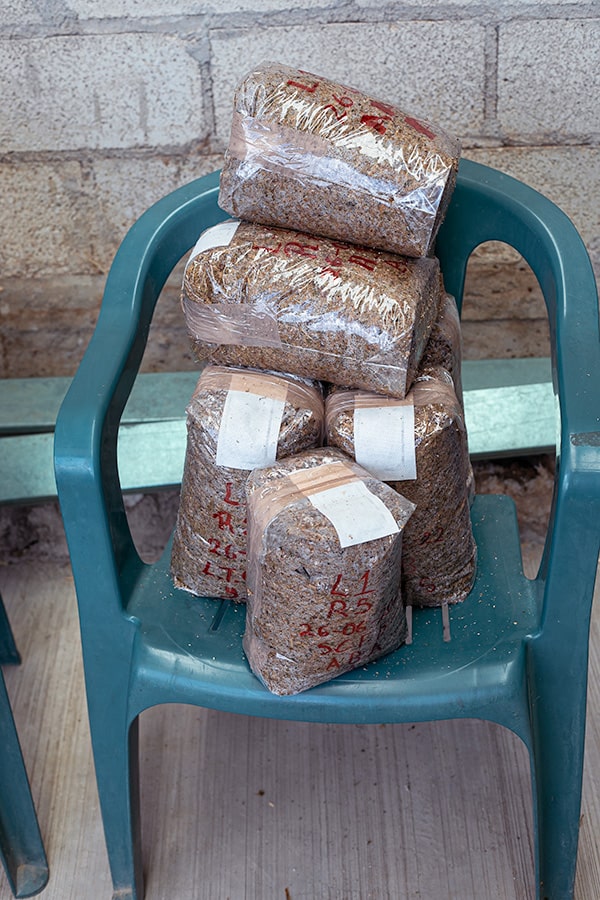
    We tested two bag types: special mushroom bags (with a breathable filter) and regular heavy-duty clear plastic bags. For regular bags, sterilize sewing needles with alcohol and punch holes every half inch — fold the bag a few times to punch multiple layers at once. Then layer: spawn at the bottom, firm layer of substrate (at least 1 inch), repeat until 3 inches from the top, then finish with spawn. Fold, seal, and tape the top. Label each bag with the date and substrate used.

    Filling mushroom grow bags with spawn and substrate

    Our 4 test bags:

    • Special mushroom bags with corn husks
    • Special mushroom bags with amaranth stems
    • Normal plastic bags with corn husks
    • Normal plastic bags with amaranth stems

    4. Mycelium Colonization (2 Weeks)

    Store bags in a cool, off-ground location with good airflow. Over about 2 weeks, white fluffy mycelium will colonize the bag. You’re looking for knot-like bundles forming — that’s how you know mushrooms are close to emerging. Once the bag is fully covered in bright white mycelium and knots are visible, cut a small 5 cm hole on the side of the bag (not the top). Limit to 2 holes per bag — more holes mean smaller mushrooms.

    Mycelium colonizing mushroom grow bag

    2 weeks progress after assembling the bags.

    5. Fruiting and Harvest

    About 7–14 days after cutting the holes, hyphae pins will poke through. Allow minimal to moderate light. Maintain temperature between 68–72°F (20–22°C) and spray the mushrooms with water 2–3 times daily to prevent drying out. Harvest just before the caps flatten by grasping each mushroom at the base and gently twisting in both directions until it separates — do not yank. Bring a clean plate or flat lid to collect them.

    Harvesting oyster mushrooms

    The Social Program Behind This Post

    The program I volunteered with is called Comunidades Unidas, a Mexican government initiative to help small towns grow their own food for consumption and eventually for sale. In a town of 2,000 in San Mateo Coatepec, Puebla, this six-week mushroom project was testing whether young villagers could grow healthy food, improve household income, and even impact measurable health outcomes. Blood tests are being collected and tracked over the years. The mushrooms are not just food — they’re a tool for change.

    Want to try growing mushrooms indoors? This pairs beautifully with a homemade loaf like our homemade sourdough bread or a hearty warm lentil and sweet potato salad for a fully plant-forward meal.

    Frequently Asked Questions

    Can I grow oyster mushrooms without a grow kit?

    Yes. You need mushroom spawn, a sterilized substrate (corn husks, straw, or sawdust), clear plastic bags, and a cool, humid location. A grow kit simplifies the process but is not required.

    How long does it take to grow oyster mushrooms from scratch?

    From assembly to first harvest, expect 3–5 weeks. Colonization takes about 2 weeks, fruiting pins appear 1–2 weeks after air exchange holes are cut.

    What is the best substrate for oyster mushrooms?

    Cereal straws (wheat, oat), corn husks, cottonseed hulls, and corn cobs all work well. Amaranth stems are also a strong option due to high nutrient content — exactly what we tested in this program.

    How do I know if my mushroom bag is contaminated?

    Green, black, or pink patches inside the bag signal contamination. White fluffy growth is good (mycelium). Any other color means the bag should be removed immediately to prevent spreading.

    Can I reuse grow bags?

    No. Bags need to be cut and sealed at various stages, so reuse is not practical or sanitary. Use fresh bags for each grow cycle.

    How many harvests can I get from one bag?

    Typically 2–3 flushes per bag. After the first harvest, soak the substrate block in cold water for 12 hours, then replace it in a humid environment to trigger the second flush.

  • 15 Family Summer Fun Ideas

    15 Family Summer Fun Ideas

    Summer feels endless when you’re in it — but you only get 18 of them with your kids before they leave the nest. These 15 family summer fun ideas are tried, tested, and family-approved, so you can stop scrolling and start making memories that your kids will still talk about years from now.

    This post may contain affiliate links. If you purchase through these links, I may earn a small commission at no extra cost to you. Thank you for supporting Love & Harvest!

    family summer fun ideas

    You think you only have 18 years with your kids before they grow up. But in reality, you only have 18 summers with them.

    Bam! Did it hit you yet? Summer is a time for families to connect. With only 18 summers, creating memories that will last a lifetime can feel intimidating. Don’t worry though — we’ve got you covered with some amazing family activities for the summer!

    summer activities list

    These 15 family summer fun ideas are tried, tested, and true! We got all our kids involved in previous summers and some of the memories we created are things they still talk about to this day. Each year that passes they become more of their little human self — constantly as parents we are playing catch up to their yearly transformation. So put the phones away, keep it inexpensive, and let’s explore all 15 ideas!

    1. Simple Meal Preparation

    A fun summer activity at home! Getting the kids more involved with their food is great fun for them. They learn how to read instructions and use their math skills to convert measurements. It’s a proud experience when they cook to feed the family. While I get my kids involved in the kitchen, I love talking to them about the food we cook — where it comes from, how it grows, and what it tastes like. Today, they love to learn about all sorts of food.

    An easy recipe to start with is our Blender Oatmeal Pancakes. Just throw everything in the blender — minimal cleanup and maximum deliciousness!

    2. Reading Projects

    Learning how to read plays a major impact on education. Summer is a great time to review everything learned in school and give kids the leg up on their reading skills. Great places to find books:

    • Visit your local library — a vast collection of books your kids can choose from. Let them choose what they want to read to encourage interest in books.
    • Reading apps — we love using the reading app called Epic! It has a large library with 40,000+ books, read-along options, and is perfect for kids just starting to learn.

    activities for hot summer days

    3. Outdoor Walks

    Walking in the morning encourages a great habit for kids. For us, we enjoy our first walk before breakfast. The kids always bring a bag for treasure hunting — leaves, flowers, branches — to make art pieces later in the day.

    • Cover conversational topics about the earth, environment, recycling, weather, seasons, and biodiversity.
    • Walk with your pets — dog walking subconsciously teaches empathy and responsibility.
    • Bring a bag — let their creative mind go free with what they find.

    summer vacation ideas

    4. Camping

    Great fun for both kids and parents. Camping is a great opportunity for skill-building, following instructions, and interacting with nature. This is by far our favourite thing to do in the summer! My best memories as a child are always camping and outdoor-related. Beyond the fun and fresh air, camping teaches kids valuable life lessons about taking risks, respecting nature, and being active.

    family trip in summer

    5. Visit a Local Museum

    Museums are always open in summer with special exhibits and shows catered to children. Visit your local museum website to see what special events are happening. In Puebla, our two favourites are the natural history museum and the space museum.

    6. Hike

    Another great family summer idea! Hiking gets the kids moving, and it’s one of our favourite ways to spend a summer day together. In Vancouver there are tons of trails to hike with family. My favourite family-friendly trails:

    unique family vacations

    7. Picnic

    Always a great family bonding moment — no computers, no housework, just focus on the kids. Pack up a spray bottle for hot days and head outdoors! Some easy picnic meal ideas from our kitchen:

    8. Road Trip

    After COVID, traveling by plane has gotten expensive and chaotic. Why not do a road trip? It’s affordable for the whole family and you can stop anytime you see something cool. Let the kids help plan the destination — they’ll learn how to execute a plan and how to be flexible when things don’t go exactly as expected. No road trip ever goes exactly to plan, and that’s the beauty of it.

    9. Entrepreneur Project

    Teaching the kids how to make money is a great way to get them thinking about money management. Once they make money, don’t stop there — teach them how to reinvest in their business. At the lemonade stand, they can reinvest in a professional lemon juicer to improve customer service!

    • Lemonade stand
    • Making and selling cookies
    • Washing cars for neighbours
    • Walking dogs for friends and family
    • Collecting recyclables

    10. Art Projects

    Art stimulates creativity and problem-solving. It helps with self-esteem, self-expression, and fine motor skill development. A great activity for hot summer days staying indoors with the AC. Family craft ideas:

    • Build a family picture frame together
    • Paint a large canvas using only fingerprints
    • Assemble easy DIY planters and paint them together

    best family vacations on a budget

    11. Planting and Gardening

    Every kid secretly loves gardening. Learning to plant seeds teaches responsibility (caring for plants) and understanding the cause and effect of watering. We love growing plants from seeds — once the vegetables are ready, I let my kids harvest and cook them. We’ve grown green peas, lettuce, and okra, and they ate everything! Buy seeds online at Baker Creek Heirloom Seeds — free shipping to the USA, Canada, and Mexico.

    summer ideas giveback

    12. Giving Back

    Teaching kids kindness early on is essential. Here are some examples of what giving back can look like:

    • Participate in a senior home
    • Randomly gifting something at a grocery store
    • Helping grandparents without being asked
    • Baking a cake for a family member
    • Releasing insects or animals back into the wild
    • Planting a tree
    • Donating to a cause they care about

    13. Board Game Night

    We are a board game family. Board game night is always paired with tons of snacks and drinks. We learn to laugh at ourselves and each other — teaching ourselves not to take things too seriously. Board games we love:

    14. Movie with the Family

    Cuddling is probably one of my favourite things to do with the kids. It’s such a cozy feeling getting to watch a movie while holding them and enjoying some popcorn. We treat screen time as a prize for the kids — they’ve earned it by behaving well during the day. Some streaming services we love: Netflix, HBO Max, Prime Video, Disney Plus.

    summer ideas with friends

    15. Enjoy the Simple Moments

    All the summer ideas we recommend are meant to be enjoyed, so remember to actually enjoy them. It’s really the small and insignificant moments in our lives that make the difference — watching those small lips curve into a smile, or the quirky way your little one dances. Embrace it and enjoy it. After all, we only have 18 summers with them, or maybe even less.

    For more summer food inspiration, check out our Mexican Slow Cooker Pulled Pork for the perfect outdoor barbecue crowd-pleaser, and our Blender Oatmeal Pancakes for a fun morning cooking project with the kids.

    Frequently Asked Questions

    What are the best free summer activities for families?

    Outdoor walks, library visits, hiking local trails, and gardening are all free or very low-cost summer activities that kids love. Many local museums also offer free days during the summer. The library is especially great because kids can choose their own books, which builds excitement around reading.

    How do I keep my kids entertained all summer without screens?

    Structure helps. Start mornings with an outdoor walk, follow up with a reading block, then move to a hands-on project like art or gardening. Save screens (movie night, reading apps) as intentional rewards rather than defaults. With variety and a loose routine, kids stay engaged without reaching for devices.

    What summer activities help kids learn real-life skills?

    Simple meal preparation teaches math, reading, and following instructions. Entrepreneur projects (lemonade stands, car washing) teach money management and customer service. Gardening teaches responsibility and cause-and-effect. Camping teaches risk-taking, problem-solving, and respecting nature.

    How do you make summer fun on a budget?

    Most of these 15 ideas cost very little. Walks, art projects, board games, and reading are essentially free. Gardening seeds are a few dollars. Picnics are cheaper than restaurants. Focus on time and creativity, not spending — the memories your kids will cherish most are the ones where you were fully present, not the expensive ones.

    How do I get my kids excited about summer activities?

    Let them choose. Give them two or three options and let them pick. Kids are much more enthusiastic about activities they feel ownership over. Also, do it alongside them — kids feed off your energy. If you’re genuinely excited about the walk or the picnic, they will be too.

    What are some meaningful summer activities that go beyond just having fun?

    Giving back is the most meaningful activity on this list. Whether it’s donating to a local SPCA, helping grandparents, or planting a tree, these experiences shape who your kids become. Combine it with an entrepreneur project and they learn both generosity and financial wisdom at the same time.